From the original article, published March of 2018.
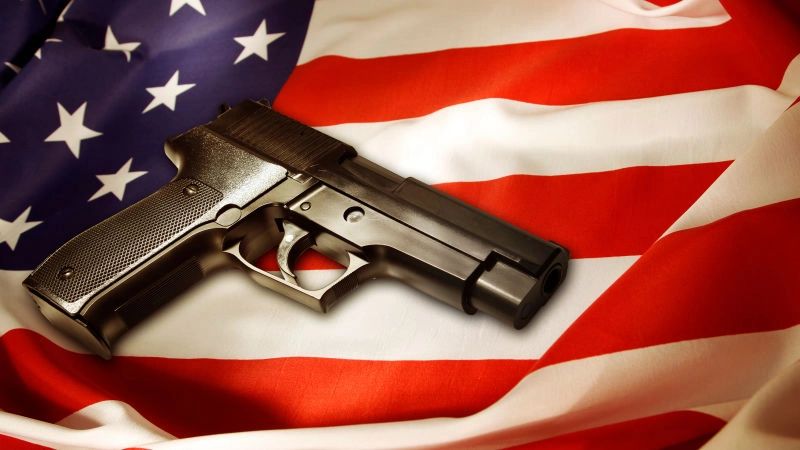
America has a gun problem. According to the Gun Violence Archive, gun violence caused the deaths of nearly 16,000 Americans in nearly 62,000 shooting incidents, including 346 incidents that were classified as ‘mass shootings.’ A mass shooting is characterized as an event in which four or more people are targeted at random during a shooting incident. That’s right, there were almost as many mass shootings as days in 2017. With little to no new legislation passed to control gun laws, 2018 will be worse; it’s simply a matter of just how many Americans will die as a result.
Naturally, gun control is one of the most-controversial topics in America at the moment. On one side, many Americans feel that it is their right, as a citizen, to own and wield a firearm under the 2nd Amendment of the Constitution. The opposition believes that the sheer abundance of firearms in the United States is the main contributor to the problem, as well as incredibly flawed gun-control laws that fail to monitor or perform sufficient due diligence before selling guns to citizens. Supporters of the 2nd Amendment feel that, if more citizens were armed with guns, then the number of fatalities as a result would decline, because there would be more protection in the public space from ‘good Samaritan’ gun owners. Here’s why that logic is flawed.
Attempting to solve gun violence by adding more guns to the problem is similar to attempting to solve world hunger by producing more food: the issue is not centered in the amount of resources available, but rather in the delegation of those resources (guns and food, respectively). If more citizens were to own and carry guns (which is the current trend in the United States), then, at the very least, the incidence of accidental shootings would increase in a parallel fashion. Moreover, with more and more citizens applying for and receiving permits for concealed carry, the number of guns per capita would skyrocket, and the security of knowing that the majority does not carry guns in public settings would be stripped from the general population. The ironic piece of this issue is that, following mass shootings, gun sales soar. People see the danger of being in an environment in which it is possible to injure many people as a single aggressor or ‘lone wolf,’ and, therefore, rush to purchase firearms in a plea to protect themselves and their families. Again, this is disregarding the main issue with firearms in the United States: there are simply too many.
So, how does a country go about curtailing gun violence? Australia is a prime example. Following waves of mass shootings, the Australian government initiated two ‘gun buyback’ programs in 1993 and 2017 during which citizens were compensated for selling their firearms back to the government, after which they were destroyed. The result: both the suicide rate and the homicide rate sunk to new lows, by nearly 60% and over 40%, respectively. Why won’t the US follow the example of its peer down under? Well, as with many stagnant issues in American politics, the answer lies in the power of lobbyists.
The National Rifle Association (NRA) is one of America’s strongest and most-steadfast lobbying groups in the nation’s history. Under the guise of advocating for civil rights, the NRA has relentlessly fought to halt any and all legislation that stops guns from falling into the hands of American citizens. Unfortunately for the victims of gun violence, they have been remarkably successful. In fact, the NRA’s platform was strengthened by leaps and bounds by the rhetoric of the Trump campaign, and is continuously fortified by Trump’s insistence on protecting the declining relevance of the 2nd Amendment. Thus, until the government can decide on gun-control laws that will decrease the danger of firearms in the United States, the body count will continue to increase, mass shootings will remain a daily occurrence, and more guns will fall into the hands of unqualified and potentially dangerous gun owners.
If 2017 taught us anything about gun violence and its perpetrators, it is that there is not always a trail to follow in the wake of a mass shooting. Months after the most-fatal mass shooting on American soil in Las Vegas, it is still unclear why the gunman performed this sadistic and grotesque act, or even how he was able to slip under the barriers of casino and hotel security. In a nation with a population nearing 330 million, Americans account for nearly 50% of the firearms that are owned by civilians in the world, and there are in excess of 90 guns to every 100 Americans. With these numbers, it is simply not possible to surveil all gun owners, regardless of advancements and improvements in the efficiency and effectiveness of the surveillance. Even if the number of guns in American hands were to stay the same, the path to battling gun violence would be difficult. Sadly, as gun manufacturers continue to produce firearms and accessories that amplify the deadliness of those firearms, Americans will be in more danger than ever. Imagine the increase in car accidents if the government allowed anyone, regardless of whether they possess a driver’s license, to drive supercharged sports cars. Hint: it would be significant.
Finally, the factor that the NRA and proponents of gun ownership for the general public seem not to consider or accept in the gun-violence debate is the context in which the 2nd Amendment was created. The 2nd Amendment was put into effect in 1791, when America had just taken its first steps to becoming a unified nation. The territory of America, for all intents and purposes, remained very much undeveloped and untouched by mankind. Therefore, it was necessary to carry protection from potential threats: wildlife, opposing militaries, and so forth. Additionally, 1791 was a time during which many people were required to hunt in order to sustain themselves; in the commoditized and commercialized world of 2018, this is simply not a fact of life any longer. This is not to mention the quality of the weapons used in the 18th century, which is incomparable to the more-advanced, more-accurate, and deadlier firearms of today. With the strong military and police presence, there are simply not enough cogent justifications as to why every American should be allowed to own and wield a private firearm. Arming more citizens simply exacerbates the problem, and further plunges America into the depths of a gun-violence enigma that cannot be solved with just one piece of legislation, either for or against gun ownership.
In the ‘land of excess,’ Americans are learning the hard way that more isn’t always better. Unchecked gun ownership must be called out for what it is: an unnecessary threat to the safety of American citizens. According to CBS News, Americans are 10 times more likely to be affected by gun violence as their counterparts in other developed nations. This is unacceptable. A nation, such as the United States, with its more-than-adequate resources and a history stained with the blood of thousands upon thousands of victims, can no longer continue to allow the issue of gun-control reform to remain in the gridlock of bipartisanism. For every time the NRA or other proponents of gun ownerships prevent the government from restricting access to firearms, more Americans will die. The United States prides itself on being a world leader, a country that sets an example of freedom, equality, and prosperity for the rest of the world. It’s time that we start acting like it.