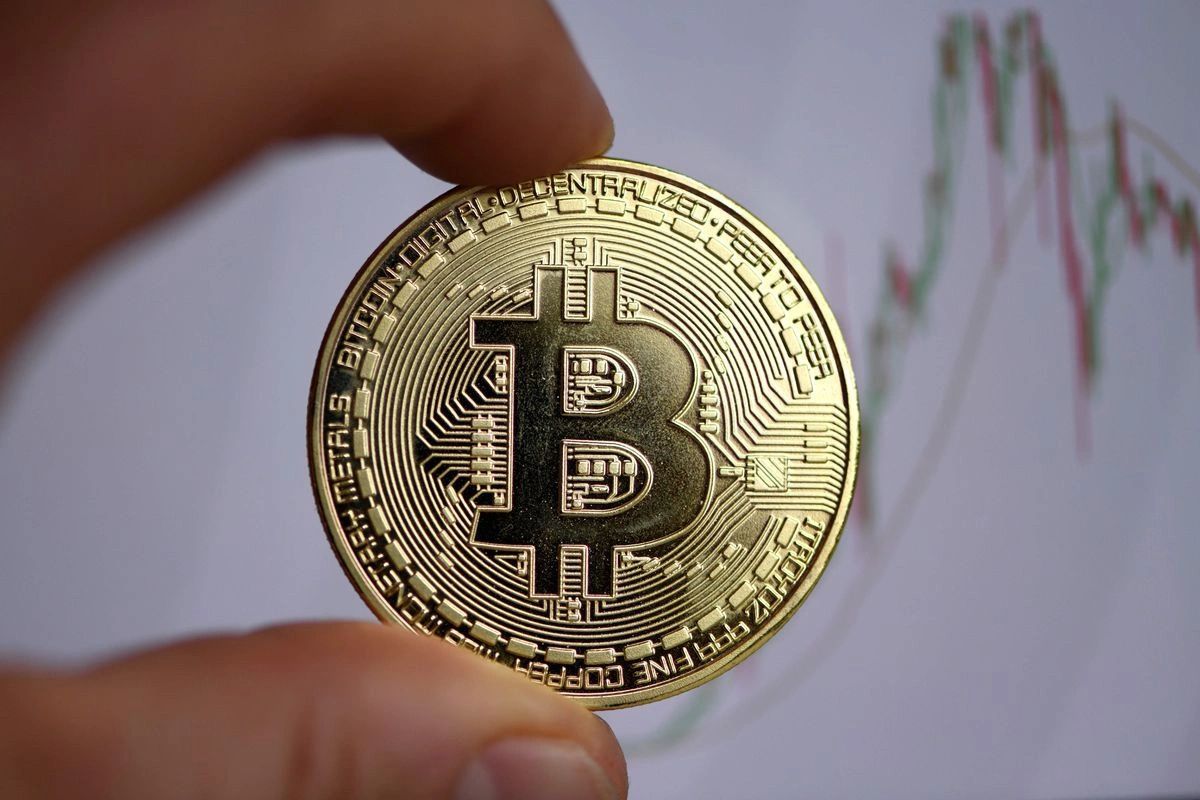
Currency is an interesting concept. Essentially, in 2021, our money holds value mostly because we believe that it holds value. Today, the rise of cryptocurrencies, like Bitcoin (BTC), has challenged us to reaffirm our conceptual understanding of the fiat-currency paradigm, and why it might not be feasible in the near future. Bitcoin, which only exists somewhere in the ether, is making a global impact, and will change the way in which everyday life is transacted — forever.
Click here to view the original article on Medium
The Old Ways
Before the days of coins and colorful paper notes, people used the “barter system,” in which the intrinsic value of a product or service was predicated upon the level of difficulty of the labor, or the yield from that product or service. The Silk Road was arguably one of the greatest manifestations of this system in modern history.
For example, my grandfather, who grew up in modern-day Slovakia, would often exchange a portion of the wheat that his family had harvested with the local miller of the village. In return, my grandfather and his family would receive the flour made from their wheat. No precious metals were exchanged, nor was any other physical currency, i.e. coins, paper notes.
Naturally, this method of transacting business worked on a local level. Before mass industrialization, it was common that a village would be comprised of co-dependent members, each of whom specialized in a trade or service. There was a blacksmith to make horseshoes and farm equipment. There was a farmer who provided meat, milk, and other animal products. Of course, there was always a brewer or vintner to provide some warmth via a cold beer or a sharp whiskey.
Now, this way of life has been widely abandoned, and goods and services are traded using stores of value as a medium for exchange. For instance, if you want to buy a new car, you can no longer pay the dealership in any other way than the USD. This also has further implications.
The Gold Standard
Traditionally, the US dollar was backed by the Gold Standard — the dollar held value derived from the value of the underlying asset. This is known in the financial world as “pegging” a currency. In modern times, this approach is taken by many countries who wish to stabilize their own currencies by “pegging” them to the US dollar.
Once the Great Depression wreaked havoc upon the US, and the world at large, the Gold Standard was abandoned. This is not to say that the US rid itself of all of its gold — in 2021, the US holds more gold than Germany, Italy, and the International Monetary Fund combined. This gold is predominantly held in bullions, or what are colloquially known as gold bars. In September of 2020, the book value of US-held gold was marked as $493.4 billion, clearly not enough to back the $2.05 trillion of Federal Reserve notes in circulation.
Nevertheless, the value of gold continues to trend in an inverse manner when compared to economic sentiment — when investor confidence falls, the price of gold rises. This is represented by gold’s designation as a “safe haven,” meaning that gold remains a store of value in the face of fluctuations in the broader market economy.
Based upon a survey conducted in 2020, approximately 11% of Americans owned gold bullion, and 11.6% owned silver. Naturally, this is a small portion of the population, and stands to demonstrate the antiquated system that is the Gold Standard.
The Beginnings of Bitcoin
The concept of a cryptocurrency, or what some would call “internet money,” was born out of the economic uncertainty of the Great Recession. The crisis had revealed to the world at large that financial institutions were not trustworthy, and had the ability to hold people captive financially. Tens of millions lost homes, jobs, and retirement savings almost instantly due to bad bets on Wall Street, creating a rut that would take nearly 8 years to overcome.
A programmer, who remains anonymous and released Bitcoin (BTC) under the pseudonym Satoshi Nakamoto, introduced a white paper on the potential of cryptocurrency as a means of creating a global, peer-to-peer network. In essence, BTC was designed to circumvent the veritable “middle man” of a transaction, namely a centralized bank. It was conceived as a means for the common man to wrest back control over his finances, without being at the mercy of bankers playing roulette with his money.
It was a revolutionary idea at its inception, and many visionaries quickly put their money behind what they saw as the future of finances. They were right. Countless investors in BTC and other cryptocurrencies have become millionaires, and even billionaires.
Accruing millions from BTC wasn’t extraordinarily difficult for early adopters of the notion that money would become entirely virtual in the future. In its earliest stages, a person could buy one Bitcoin for a paltry $0.0008, an almost inconceivably small amount. At the time of this writing, one BTC holds a market value of ~$57,000. This denotes a staggering 7,125,000,000% increase in value.
One of the preeminent proponents of Bitcoin is Chamath Palihapitiya, a former Facebook employee. As an early adopter, Chamath bought 1,000,000 Bitcoins in 2010, a substantial portion of the total amount in existence. Since then, he has become a billionaire, with a net worth of nearly $1.1 billion. Additionally, he heads Social Capital, a Venture Capital firm that specializes in early-stage companies looking to make a positive impact on society.
He estimates that BTC will reach a jaw-dropping $1 million valuation by 2037.
The New “Gold” Standard
As we climb the mass-adoption curve, BTC is seen by some investors as a digital “safe haven,” the new coming of gold. Due to the fact that users can store their Bitcoin in virtual wallets, many see this movement as a means of betting against the larger financial system in which we live today. As more people become tech savvy, and have the means to invest in alternative assets, Bitcoin is slowly becoming a reliable system for making transactions. No longer must a person wait for the bank to settle funds, or to verify a check. A Bitcoin transaction is nearly instantaneous, and can even be completed via email.
Of course, in response to the crypto-craze, thousands of cryptocurrencies have been created, with many of them focused on specific aspects of financial affairs. Arguably the second in line behind BTC is Ethereum, sometimes referred to as “ether,” which many believe is the future of what is known as the “blockchain.” Other coins, like the meme-based Dogecoin, are simply for entertainment value, and have few practical uses in society. That is not to say that it is a foolish investment — Dogecoin is up nearly 2,000% year over year.
Potential Risks
Although Bitcoin constitutes a salivating investment in 2021, there are risks that may deter the average investor. For instance, unlike Gold, Bitcoin is still susceptible to crashes — most notably in FY 2017–2018, when the value fell nearly 84%. Furthermore, this is not the only crash in Bitcoin’s history.
It seems that, in today’s market, there is no predominant sentiment as to what will happen with the value of cryptocurrency. On one side, institutional investors, chief bankers, and conservative economists seem to be extremely bearish on BTC, either unable to or unwilling to see the progressive nature and potential of cryptos to be a catalyst in society to provide financial freedom to many. On the other side are the bulls, the people willing to bet millions on the future. These bulls have predicted that BTC could rise to $300,000, or even $700,000 by the end of 2021. Naturally, these estimations seem to many to be “pie in the sky.”
Another risk to consider is how one should store their cryptocurrency. There have been many cases of fraud, where hackers or scammers stole millions in BTC. Additionally, as more and more services come to market for storing, buying, and transferring cryptocurrencies, the trustworthiness of these companies remains in question. The prevailing sentiment in the crypto community is that there is one method of protecting your BTC that lessens the risk: a hardware wallet.
Essentially, a hardware wallet is a hard-drive, where cryptocurrency can be stored in one location, rather than in a de facto crypto-bank, such as Coinbase or BlockFi. On the surface, it seems to be fail-safe. However, one of the extraordinary risks lays within how one can access their hardware wallet — extensive passwords.
In many cases, these wallets are protected by a series of questions that the user must enter before storing or sending cryptocurrencies. However, many wallets have an anti-hacking feature that locks the user out after 10 attempts, just as your email account might. The difference is, when you are locked out of your hardware wallet, you’re locked out for good. There is a man from San Francisco who has nearly $220 million in cryptos in his wallet. The catch? He can’t remember his password.
Final Thoughts
Today’s investor must not be caught up in the outdated mindset that advises investing in traditional stocks, ETFs, and other commodities, the ones that yield 8–10% over time. In a time when BTC has jumped 500% in a year, the people who are risk-averse, and don’t invest in cryptocurrencies, will be left by the wayside. Many believed that Bitcoin was simply a fad, a way for nerds on the internet to trade with each other, or for drug dealers to sell illegal substances on the dark web. In 2021, it has far surpassed that.
Many corporations and big-time investors are banking on Bitcoin. In fact, Tesla, which made an initial investment of $1.5 billion in 2021, has already seen a return of $930 million — more than the company made selling cars in 2020. In fact, you can now buy your Model S entirely with Bitcoin!
Even Apple, the world’s most valuable company, has announced plans to create a crypto wallet, and allow users to store their currencies on their iPhones. This advancement comes with an additional promise — that Apple will develop a card, akin to a credit or debit card, that allows users to make purchases virtually anywhere.
If those announcements weren’t convincing enough, America’s oldest bank, BNY Mellon, has taken the first steps in allowing customers to store, transfer, and make transactions using cryptocurrency.
Bitcoin, and cryptocurrency in general, is here to stay. Long-gone are the days of hoarding dollars under your mattress, or using Western Union to complete a wire transfer. The future is all about speed, convenience, and control, and cryptocurrency is the manifestation of all of these things. So, in 5 years, when you go to a McDonald’s to order a Big Mac for 0.0005 Bitcoin, you can thank Mr. Nakamoto.