Last month, I had the opportunity to visit China for the first time. It had always held a sense of mystique for me. After spending some time there, I wanted to share some of my candid thoughts on my experiences, and why I would highly recommend it to any traveler.
Culture Shock
Immediately after landing in China, I was impressed. The infrastructure is simply world-class. Sprawling airports, futuristic train stations, and towering city centers, all in pristine condition. There is a tangible sense of efficiency - food delivery within 15 minutes, taxi rides across the city for less than $5 USD, 100% mobile payments through streamlined and universally accepted applications. It is no surprise that China’s development on the world stage is highly regarded.
However, even as China continues to prove itself to be a modern, global superpower, there are some indications that certain elements of the past have remained. As a communist country under authoritarian rule, China’s government still has unyielding control over the information systems within its borders, including limited access to social media, websites, and even certain phone applications. News is carefully filtered, and criticism of the Party is strictly forbidden. Unbridled freedom of speech and information is simply not a reality in 2025 for Chinese citizens.
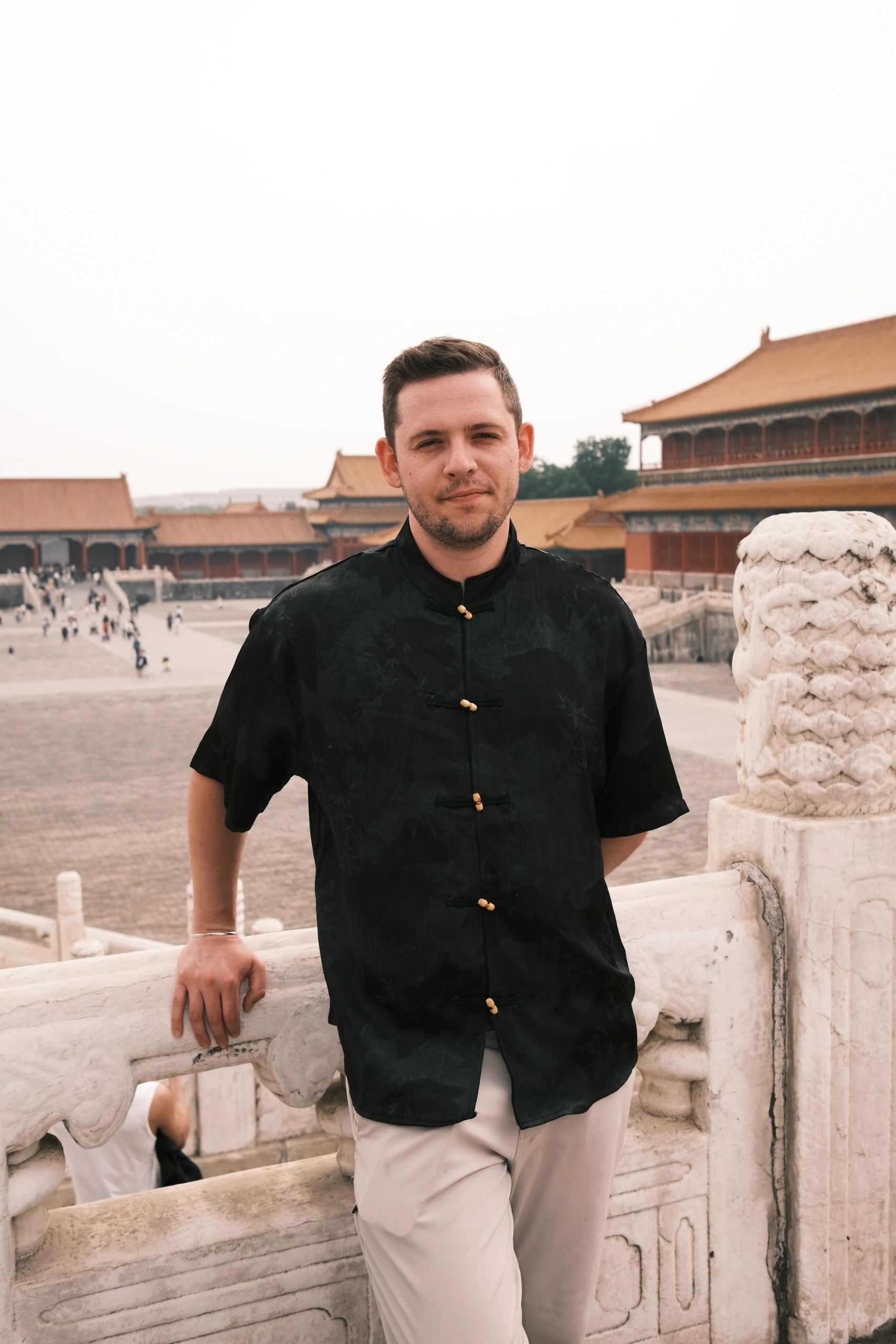
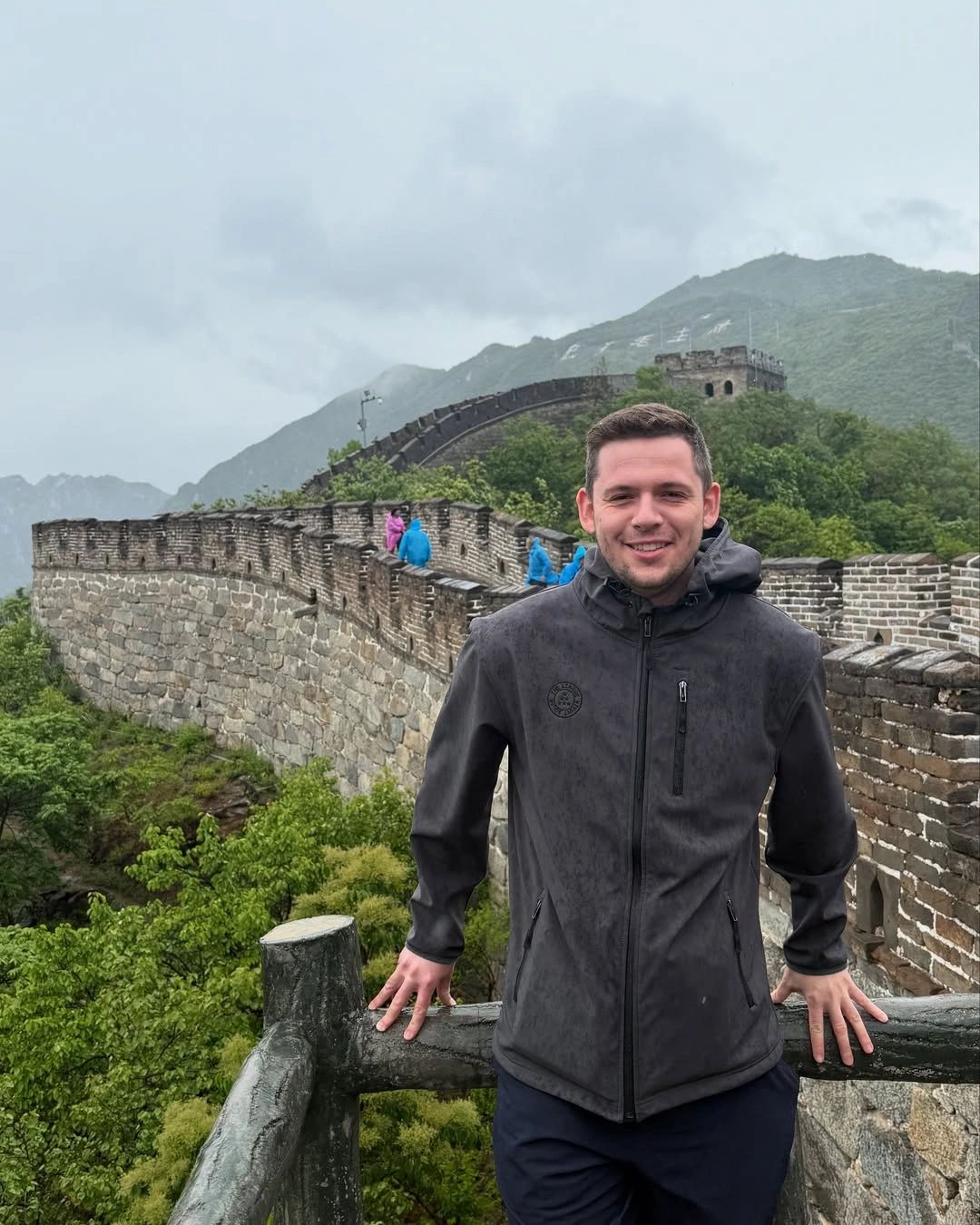
As an American citizen, I often find it fascinating to visit countries that have histories that span centuries, as my homeland is infantile in comparison. So, to visit China, a country whose legacy dates back to written history under the Shang Dynasty in 1250 BC, was a particular treat. I was able to see the Great Wall, one of the world’s wonders that truly lives up to its reputation. I walked the Forbidden City, and learned of the rituals and practices of emperors of long ago, and the enormous responsibilities entrusted to them. Simply bearing witness to feats of human engineering that have weathered millennia was awe-inspiring, and I have a sincere admiration for the dedication of the Chinese people in preserving it.
Although I have a cursory understanding of the Cultural Revolution, I was surprised to see how prominent the legacy of Mao Zedong remains in China. Thousands of people line up each day, rain or shine, to see his mausoleum in Beijing, and upon exiting the train station in Dandong, I was greeted by a statue of Mao proudly presiding over the city’s inhabitants, his right arm extended in a regal gesture in the direction of Beijing. When visiting a museum in China, I was met with thousands of artifacts left by former leaders of the Revolution - handwritten letters, decrees, war-torn uniforms, and more, carefully preserved for posterity. On placards underneath the exhibits, the prowess of Mao and the Party is professed in no uncertain terms.
I was also afforded the opportunity to walk across the Yalu River Bridge in the northern city of Dandong, a site of particular pride for the Chinese people, which withstood more than 5,000 bombardments from the US troops during the Korean War. Upon walking across the bridge, I found myself mere meters away from the North Korean border, and several North Korean civilians were visible, walking calmly across the riverbank, and gliding along the water in freight-liners. Although relations have become more difficult in recent years, China and North Korea remain close allies and trading partners, and it was of particular interest for me, as an American citizen, to come face-to-face with a people who are so regularly the focus of propaganda in my own country.
I immediately fell in love with the city of Chengdu, which is widely known as the home of the world-renowned panda sanctuary, founded in 1987. Pandas are not only revered in China, but hold the status of celebrities. People know the names of their favorite pandas, and follow their lives closely, enjoying playful clips from the sanctuary, and relishing the news of new pandas being born. Walking through the city, you will be met with a sea of murals dedicated to the national pride of China, and the sanctuary routinely draws crowds in the tens of thousands, eagerly pressing up against the barriers to get a closer look as the pandas chomp ceaselessly on their favorite snack, bamboo, which comprises a staggering 99% of their diet.
Chengdu is also home to the tradition of ear cleaning, or tao er, in which customers sit in chairs on the street as vendors carefully extract ear wax with long, cotton-tipped picks. The ritual ends with a cleansing through vibration, which entails a set of metal tongs that are pressed against the ear, and struck lightly by the vendors until they reverberate through your eardrums. Although I was hesitant to try, I did eventually relent, and partook in the sacred ritual of tao er. I can’t say that I am a fan.
China’s vastness also results in unique pockets of sub-culture, with a wide variety of cuisines and traditions, as well as stark contrasts between residents of different regions, all of whom carry their own dialects and temperaments. These differences are practical, as well. For instance, the residents native to the more-humid areas of China prefer spicier food, with most meals served upon a bed of searing red chilis, which I often encountered while exploring Sichuan. In areas heavily populated by the Cantonese, such as Guangdong, residents enjoy a soup-based diet, rooted primarily in the belief of its role in healing and vitality.
Meals in China are served, without fail, family-style, meaning that diners order a wide array of dishes to be shared by all, rather than the Western tradition of ordering meals individually. Chinese cuisine is replete with pork dishes, and most meals are served with a bed of rice, and accompanied by side dishes of sautéed and pickeled vegetables. Another curiosity for me came in a traditional restaurant known for Peking duck, when the server brought over the dessert that we had ordered in the middle of the meal, even before we had received our hot entrées. Chinese people take pride in crafting desserts that are not ‘too sweet,’ and it is rare to see commonplace items in Western cuisine, like chocolate or other sugary candies, consumed there. Instead, you will encounter dishes like bingfen, or ‘ice jelly,’ as well as desserts like bean cakes, which are served in a wide variety of shapes and flavors, and only boast a mild sweetness.
Retirement life is vivacious in China, and pensioners often leave work earlier than in the West, with women retiring between 50 and 55, and men between 60 and 63, although these ages have been raised in recent years by the government. However, as opposed to the common practice in the United States of finding a retirement community and passing the days with golf or other hobbies, Chinese citizens seize the opportunity to spend their time traveling with friends, attending dance classes on the street, enjoying calisthenics and tai chi in the park, and spending time with their grandchildren. In China, it is common practice for children to be raised by their grandparents, as the parents are often inundated with the demands of work. Chinese people are also family-centric, and it is a widely held tradition that elderly parents live with, and are cared for, by their children.
In addition to modern medicine, Chinese people place strong emphasis on so-called Eastern medicine, which is rooted in the use of herbal remedies to cure, and more importantly to prevent, illness. Healthcare is socialized, and highly efficient - I was able to see an Eastern medicine specialist within 30 minutes, and received a custom-made concoction of herbs and supplements tailored to my needs within 24 hours, all without insurance.
In my experience, Chinese people tend to be more direct in their interactions with others than what I am accustomed to, and they don’t hold back their opinions. This was apparent to me when walking on the street, when passers-by would approach me asking for pictures, or even taking pictures of me without permission. Once, when ordering from a food cart, a woman boldly pointed her finger within inches of my face, and loudly proclaimed lao wai, the term for ‘foreigner’ in Mandarin. However, I was met with graciousness and hospitality, and people made an effort to share their culture, and express their curiosity about my own, as well.
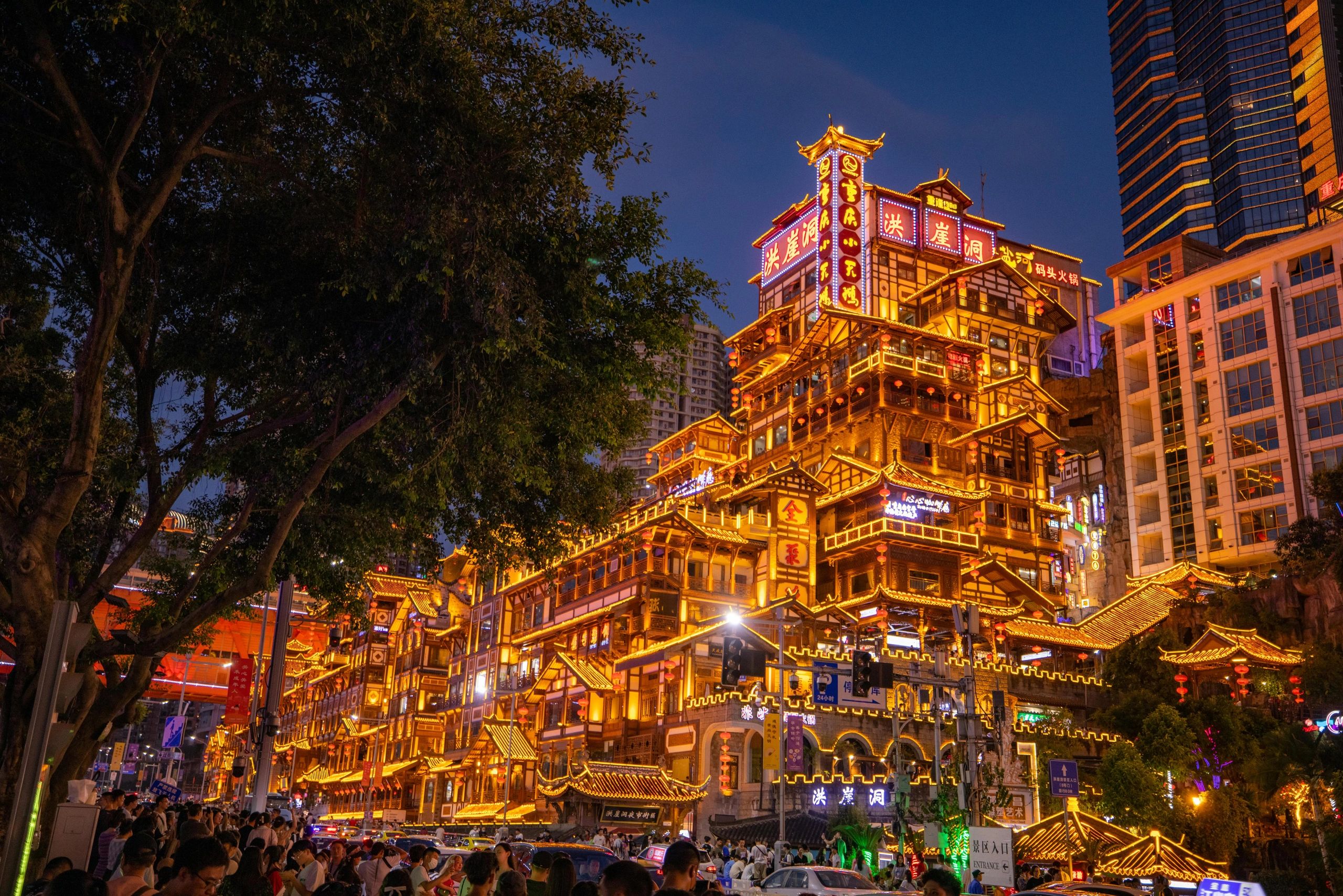
China is rapidly evolving, and its development far exceeds its competition. When visiting Chongqing, often referred to as the ‘mountain city,’ I was shocked to learn of the massive expansion that has taken place in recent decades, reserving its spot as one of the most-advanced and largest cities in China, with a population of over 30 million. The construction and layout of the city is also fascinating, as it was built directly into the mountainside, and so contrived that it is hard to orient yourself. For instance, you can climb 12 stories up or down to arrive on a platform or square, only to realize that you are still 25 stories off from ground level. The streets are bustling with energy and a breathtaking architecture that truly comes to life in the nighttime, when the buildings are fiercely illuminated against the backdrop of the Yangtze and Jialing rivers, each of which have played a pivotal role in the city’s development and history.
Beyond the magnificence of its modern cities, China is also home to the world’s largest network of high-speed trains, which are cost-effective and accessible to citizens and visitors. Upon visiting a tier-one city in China, you will quickly realize that they boast an impressive fleet of electric cars, which audibly mute the cacophony of combustion cars in other major cities, like New York. Taxis are incredibly affordable - I don’t believe that I paid more than $10 USD during my entire time there, including long trips to and from the airport. Delivery services are truly a wonder to behold, and it is possible to receive nearly anything your heart desires within 10-20 minutes, oftentimes helpfully delivered by friendly robots that autonomously navigate hotels and independently operate elevators. Service in hotels also exceeded my expectations, with the front desk willingly offering services outside of the realm of Western hospitality, including delivering laundry directly to my room, and conveniently mailing packages to other cities free of charge. Overall, my experiences in traveling, dining, and more were exceptional, and I must say that I have begun to miss that standard of service since arriving home.
Why You Should Visit
China is a trove of history, culture, and modernity, and is certainly a worthy addition to any traveler’s bucket-list. In my first foray to East Asia, I was excited to experience an entirely new culture, and my visit certainly did not disappoint. From the sanctity of tea traditions in Chengdu to the awe-striking view of Shanghai’s waterfront, China holds a magnitude of wonders sure to delight even the most-seasoned of travelers.
All in all, I am grateful to have had the opportunity to visit such a culturally rich and historic nation, and I know for certain that I will make many trips back to explore further. If you need recommendations for baozi in Beijing, or where to find memorabilia for your favorite panda in Chengdu, I’m here to help. Until then, 再见.