Original article published Oct. 2021 via Medium.
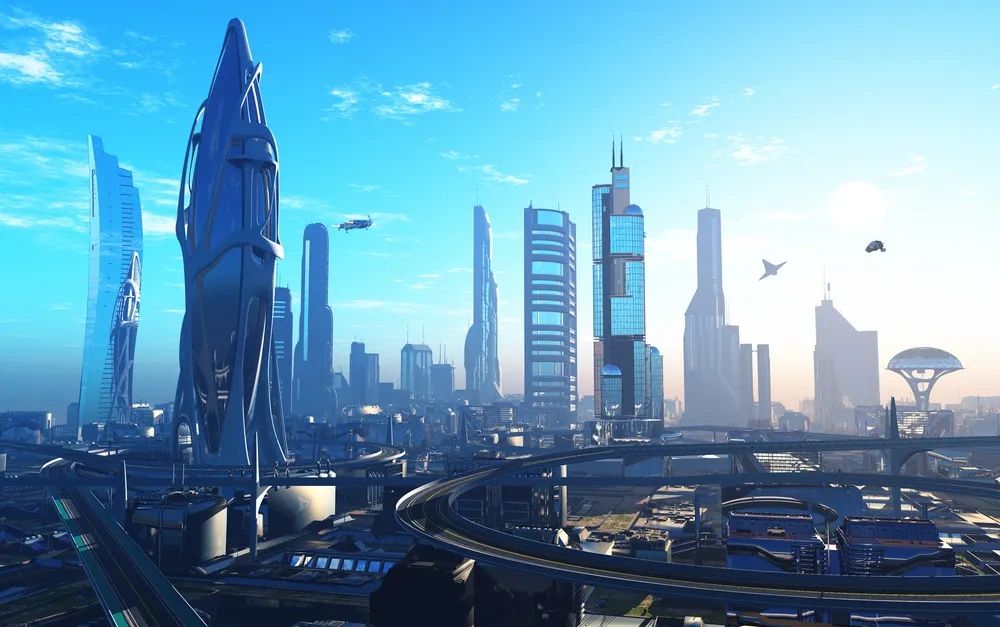
Well, it’s official — we are one step closer to leaving the physical world behind, and embracing our new lives in the digital world. This exciting, and frankly scary, world is known as the metaverse, a term coined by American writer Neal Stephenson in his science-fiction novel, Snow Crash. The term may seem difficult to understand at first, but it can be defined simply as:
‘Metaverse (n) — the combination of Augmented Reality, Virtual Reality, and Physical Reality into a seamless experience that constitutes its own world or universe.’
Essentially, the metaverse is comprised of technology that allows us to integrate our lives fully between the physical and the digital, and aims to make the transition between the two virtually non-existent.
The Latest
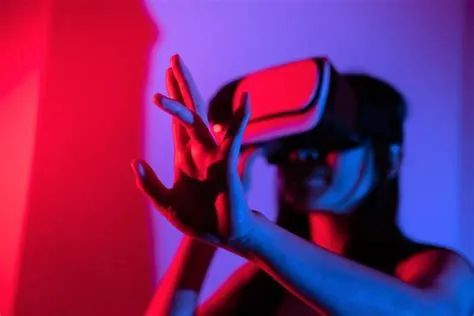
This week, Facebook made an announcement that set the digital world on fire — it is rebranding itself as Meta, marking a pivot on the part of the Social Media giant in taking a leap ahead of the competition in the race to what Zuckerberg refers to as the “next generation of the internet.” For the newly minted Meta, this means tackling such issues as building fully virtual, 3D workspaces, where colleagues can interact with each other’s avatars via the metaverse. Zuckerberg also noted development efforts aimed at creating smart glasses through a joint-partnership with Ray-Ban. With the use of these glasses, Meta hopes to offer users the ability to interact with the world through augmented reality, whether that be looking at a computer screen that isn’t there, or seeing virtual art on the street corner; when donning the glasses, the possibilities for what the wearer can experience are nearly endless.
When customers are perpetually immersed in the metaverse, the possibilities for ad-placement, content, and delivery are endless.
So, this begs the question: how does Facebook changing its corporate branding affect the Gaming Industry? Let’s find out.
The Age of Technology
If you’re a fan of the classic game Pokémon (or even if you aren’t), then you probably remember the mobile app that took the world by storm not so many years ago. For many, Pokémon Go was the first introduction to the concept of the metaverse — rather than controlling your avatar in the game and exploring via a joystick or keypad, players were encouraged to venture out into the physical world in search of pocket-sized, digital creatures. This, of course, led to many comical moments, including a veritable stampede of over-eager Pokémon Go enthusiasts in Central Park, coagulating at record speeds, with their eyes fixed firmly upon their mobile devices, in search of the sacred Snorlax. Technology is truly breathtaking, isn’t it?
Now, with the advent of the metaverse, alongside digital advancements in cryptocurrency and non-fungible tokens (NFTs), the term “virtual reality” is quickly becoming just “reality,” as developers rush to bring as much of the human experience online as possible. For an introduction to the concept of NFTs in Gaming, check out my article here.
The Next Generation
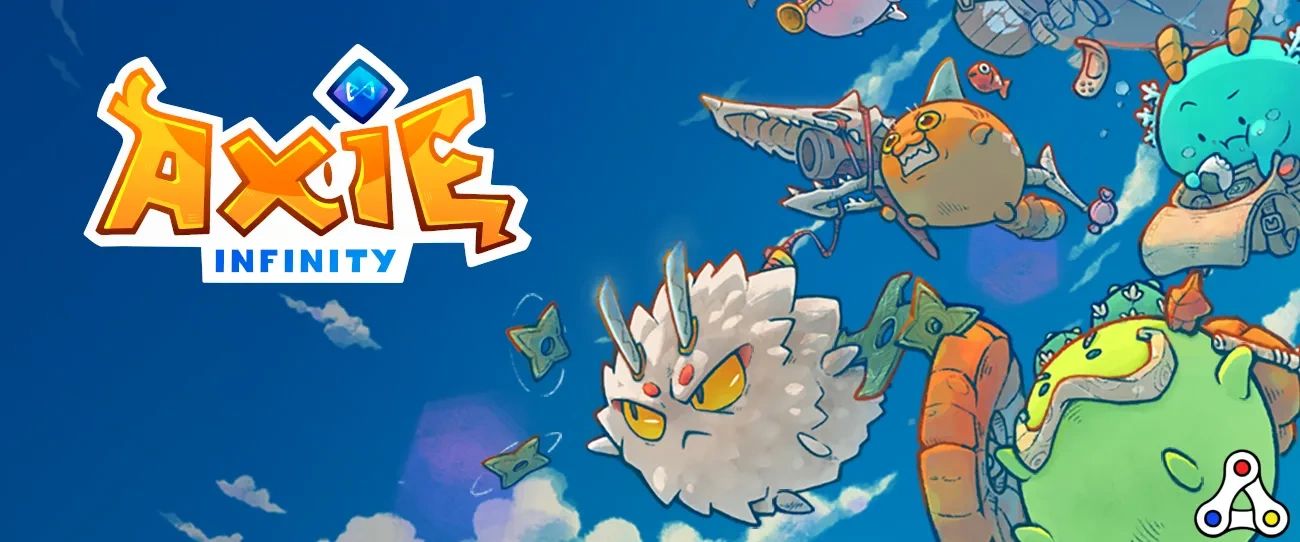
Although Pokémon will forever be cemented in our hearts, the next generation of games has arrived, and they’re here to take things to the next level. As mentioned above, two important building blocks have pushed us one step closer to a full-fledged metaverse within Gaming — cryptocurrency, and NFTs. The online game Axie Infinity is an excellent example of what it means to drive development within the metaverse.
Axie Infinity, which also has its own cryptocurrency ($AXS), has emerged as a fan-favorite across the globe, and can be thought of as a new-age Pokémon. Within the game, players can collect creatures called Axies, but with an important twist — each Axie creature is actually an NFT built on the Ethereum blockchain! Due to these two, important distinctions, Axie Infinity has developed an entire economy around the game. In fact, players are able to translate their time and effort spent in the game into actual dollars and cents, effectively earning money by raising, battling, and trading their Axies.
Due to the fact that players effectively own one-of-a-kind Axie creatures, an entire marketplace and ecosystem have been developed around the trade of these Axie NFTs — in fact, Axie’s website claims that the most-expensive Axie ever sold was for 300 ETH, which, at current prices, is equivalent to $1.3 million dollars. I don’t remember getting that much for my Charizard on my Gameboy Color!
However, the metaverse doesn’t stop at cuddly creatures that you can trade with people around the world. It seeks to emulate the real world. Enter: Decentraland.
Virtual Land for Sale

If you’ve ever dreamed of owning land, but don’t have the time to search for it on planet Earth, then today’s your lucky day — Decentraland has you covered! Decentraland ($MANA) is a game early to the concept of true digital owneship through NFTs. The game declares itself “the virtual destination for digital assets,” including NFT wearables, names, and, most importantly, LAND.
Much like real-world real estate, the LAND available for purchase within Decentraland is finite — just over 90,000 parcels of LAND exist in the game. Much like the real world, players are able to build upon the land that they own in the game, and can transact these parcels of land with each other, as well. The best part — Decentraland belongs entirely to the players!
Last week, Decentraland held a Metaverse Festival that brought A-list celebrities, such as DeadMau5 and Paris Hilton, to the metaverse for the first time. Decentraland pinned the festival as “a celebration of music and culture in the virtual social world, but also a recognition that the metaverse has arrived as a viable, irresistible and profitable space for creative people, whatever their medium or background.” This landmark event demonstrates that entertainers are exploring new mediums to reach and interact with fans, and succeeding. Imagine watching Taylor Swift’s World Tour from a virtual concert hall in your living room. I’m sure the tickets would still be expensive, but still!
This brings us just one step closer to living our lives entirely virtually. As they say, the Future is now.
What’s Next
I have a few of my own hypotheses for what might come next in regards to the metaverse and Gaming.
Picture this — it’s 2025, and you’re walking down the street in your brand-new pair of Meta smart glasses, when a flicker catches your eye. It’s a virtual advertisement for a new release of your favorite game! So, you click on your glasses to reveal more information. For just 500 tokens, you can get the Special Edition game downloaded directly to the medium of your choice, whether phone or console. You click the “Buy Now” button that appears in front of you, and, within 10 seconds, you’ve completed the purchase of a new game! When customers are perpetually immersed in the metaverse, the possibilities for ad-placement, content, and delivery are endless.
Maybe you’re not into playing a game so much as you are into hanging with your friends online. So, it’s Halloween, 2024, and you’re hosting a 90s party on your LAND plot, where each guest is expected to dress up like a beloved character from that era’s pop culture. As the host, you know that you have to find the best costume, so you begin searching the Decentraland marketplace and find that the Friends 30th Anniversary NFT collection is out. So, you spend 25 MANA on the best costume you can think of — Spudnik! With a simple click, the costume is downloaded, and you’re ready for the party! Just one thing — make sure to put out the punch before your friends’ avatars start showing up.
The Bottom Line
Building out the metaverse could mean a drastic reduction in the amount of face-time that we spend with our peers. The prevalence of virtual school, work-from-home, and long-distance relationships points to the fact that, whether we realize it or not, we are constantly putting more of our lives online, into the metaverse of the future.
Naturally, there are those who condemn this as a loss to humanity, and the degradation of the social fabric that we have woven as a species. I tend to fall on this side of the argument. On the other side stand Mark Zuckerberg and the 10,000 employees that Meta aims to hire in the hopes of beating out the competition to become the place where we spend our virtual lives.
One thing, however, is for certain — the Gaming, Crypto, and NFT spaces are moving faster than ever, and a tremendous amount of progress is being made in the technologies that drive these industries. In fact, at the time of this writing, the market capitalization of Bitcoin ($BTC) is larger than Facebook.
So, are you ready to jump into the metaverse?