
I’ve been involved with crypto since 2017. It was a time when only the true believers were holding strong to their conviction. Institutions, influential voices, and the Traditional Finance (TradFi) cohort at large were far from convinced, and often viewed Bitcoin (BTC) as a scam perpetrated for the purpose of drug trafficking, money laundering, and other nefarious activity. However, in recent years, and especially in 2025, the true believers are reaping the rewards, and former critics have not only changed their stance, but are ready to put their money on the line in the race for crypto dominance.
Let’s take a look at what has changed, and why everyone will be using crypto in their daily lives in the very near future.
A Peer-to-Peer Electronic Cash System

On October 31st of 2008, in the midst of the Great Recession precipitated by reckless and greed-fueled Wall Street bankers, an anonymous person, using the pseudonym Satoshi Nakamoto, published a white paper entitled ‘Bitcoin: A Peer-to-Peer Electronic Cash System.’ In it, he proposes a ‘trustless’ system operating on a network of independent nodes that eliminates the need for a third-party in order to complete transactions. One of the most-important distinctions of Bitcoin as opposed to traditional fiat currencies is its limited supply - there will only ever be 21 million Bitcoin in existence, and these coins are ‘mined’ via GPUs operated on the network.
Satoshi did retain ~1 million BTC in various wallets, all of which have been dormant since the inception of the Bitcoin network, meaning they have not transferred or sold any of the original coins. In recent weeks, Bitcoin’s price topped $120,000 USD for the first time, making the mysterious Satoshi the 11th richest individual in the world, with a net worth totaling nearly $129 billion. Yet, despite his prolific wealth, Satoshi remains anonymous to this day, celebrated by a generation of Bitcoin loyalists who view his contribution as the saving grace of the financial system in the 21st century.
In the white paper, Satoshi also underscores several key issues with the banking infrastructure as it currently stands, including trusting third-parties to complete transactions, centralization, and a lack of privacy. However, as the world’s debt crisis has grown in recent decades, it has become clear that Bitcoin, and crypto technology in general, offers many solutions to other issues as well, including inflation, delayed settlement, tracking of transactions, and more. To learn more about the current debt crisis in the United States, check out my article here.
Evidently, institutions have become believers in Satoshi’s vision of a digital monetary system, and are adopting blockchain technologies at record pace. With the advent of a Trump administration that has clearly expressed its intention to ‘make the United States the crypto capital of the world,’ the stakes have never been higher.
A New Paradigm
The race to adopt crypto has never been more-competitive, and record demand is flowing from institutions, governments, and retail investors looking to get ahead. Bitcoin has come a long way since legendary investor Warren Buffet decried the apex cryptocurrency as ‘rat poison,’ and institutions competing against Buffet’s Berkshire Hathaway (BRK) now own a staggering 17% of the world’s circulating Bitcoin supply.
In addition, new on-ramps to crypto, offering both direct and indirect exposure, have fueled the adoption of this new and exciting technological advancement. In short succession, crypto-based exchange-traded funds (ETFs), like ARK Invest’s ARKB and BlackRock’s iShares Bitcoin Trust (IBIT), have become some of the best-performing assets on the market, with the latter generating a whopping 25.26% year-to-date return in 2025.
Many institutions have now taken a step forward, seeking more-direct exposure than is offered by these ETFs - companies boasting Bitcoin and Ethereum (ETH) treasuries have become the new darling of Wall Street. Most-prominent among companies betting on the future of crypto is Michael Saylor’s Strategy (MSTR), which is the single largest holder of BTC among public companies, with nearly 630,000 BTC valued at $74 billion. Saylor’s bet has more than paid off, and Strategy has consistently outperformed the broader market, seeing its stock rise ~1,100% since it first added Bitcoin to its balance sheet in 2020.
BlackRock, the world’s largest asset manager, has also entered the race in a meaningful way, steadily accumulating over 3% of the total Bitcoin supply, and setting its sights on the next big thing for crypto investors - Ethereum. In just 251 days, BlackRock’s Ethereum ETF reached a $10 billion valuation, signaling a pivot amongst institutional monoliths. In the last week alone, SharpLink Gaming (SBET), led by Ethereum co-founder Joseph Lubin, bought nearly $1.7 billion in ETH for its treasury, just as former BlackRock executive Joseph Chalom was named co-CEO. In order to keep up with the pace, companies like SharpLink and Strategy have begun issuing new stock to raise money to quench their thirst for crypto.
All of these developments have coalesced into what experts are saying could be the ‘perfect storm’ for the crypto markets, with Ethereum’s supply on centralized exchanges (CEX) reaching a 9-year low, a sign that whales are accumulating, and a supply shock is imminent.
Green Means ‘Go’

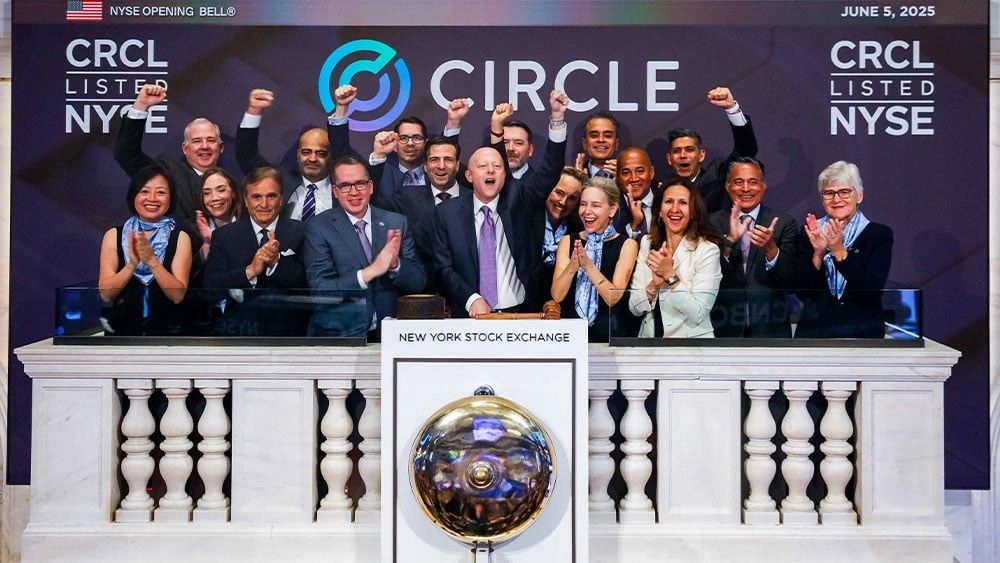
As prices continue to rise and the markets heat up, crypto has become a primary focal point for everyone, including governments around the world. In recent months, the United States has effectively given the green light to begin mass adoption, with the President launching his own meme coin, Congress passing landmark bills to affirm regulatory standards, and crypto stories, like Circle’s (CRCL) recent IPO, stealing the show on Wall Street.
Other nations have joined the party too, with countries like Kazakhstan, El Salvador, and Bhutan, among others, establishing sovereign crypto wealth treasuries. This progress has not been without criticism, however; opposition to the development of Central Bank Digital Currencies (CBDC) has raised concerns about centralization, privacy, and more on the international stage.
Yet, increased regulatory clarity in the form of laws streaming out of the White House has marked a turning point for institutions hesitant to adopt crypto. Even JP Morgan’s (JPM) Jamie Dimon, one of Bitcoin’s harshest critics, has inked a deal with crypto giant Coinbase (COIN) to grant access to 80 million clients looking to utilize crypto in their daily lives. Moreover, big banks like Bank of America (BAC) and Citi (C) are already making moves to utilize digital stablecoins, which are backed by US dollars, and offer faster and cheaper transactions, helpful in reducing fees associated with credit cards.
There is one thing for certain - crypto will play a significant role in the everyday lives of us all, whether the average person likes it or not. Let’s take a look at how recent crypto developments have affected retail investors, and what comes next.
Rugs to Riches

Despite institutions and nations around the globe making ripples in the crypto world, only 4% of the world’s population currently owns Bitcoin. That is expected to change very soon, and in ways that some might not expect. States around the country, including Michigan, Texas, Wisconsin, and Virginia, have invested state pension funds into crypto and crypto-related ETFs, which would have been considered unconscionable in the financial world just several years ago. With rising inflation and a crushing national debt, some politicians are hoping that crypto is a safer bet than traditional assets in the long run.
Current data suggests that retail investors have not returned in full force to the crypto markets in 2025. It’s no surprise - the world of crypto still remains mysterious, and is viewed negatively by a large share of the population, who cite its volatility as a primary concern. More than that, the world of crypto is replete with scams and manipulation, most notably what have been deemed ‘rug pulls,’ when a small percentage of holders of a given coin secretly hold a majority share, and unexpectedly dump their holdings, driving the price down significantly, and pulling the rug out from underneath remaining investors. Still, there are crypto success stories - tales of meme coin millionaires who have gone from rugs to riches in the blink of an eye. Take the case of Peanut the Squirrel, for instance - a viral sensation of a squirrel scandalously euthanized in New York that sparked a viral meme coin that saw its market capitalization reach over $1.1 billion USD within weeks of its launch.
Price action in the crypto market is still tightly tethered to Bitcoin, and we are nearing the final stage of a bull run that promises to see valuations of coins and crypto-adjacent companies reach all-time highs. Buyer beware - from its peak in the 2021 bull market, Bitcoin dropped an eye-watering 77.5%, from $69,000 to just $15,500.
The surge continues, however, and nearly all signs point to what investors call a ‘blow-off top’ in 2025, the part of the crypto cycle that results in market mania and irrational valuations. For those who are new to crypto, it is advisable to have some exposure to this new class of asset. The widely accepted strategy is to simply dollar-cost average (DCA), buying small amounts on a routine basis to mitigate large swings in price, and steadily accumulate over time.
How high can Bitcoin go in 2025? Leaders in the space have suggested a vast array of estimates, with predictions ranging from $150k USD all the way up to $1 million per coin. It’s anyone’s best guess at the moment, but those who believed in Bitcoin from the start have been vindicated, whereas the doubters have been forced to eat their words, and open their wallets.
Curious about more-practical use cases for crypto and blockchain technology? Check out my article, The Case for Crypto, here.