The following is from a post originally published Jan. 30, 2021.
As with many of my fellow compatriots, I can say, with much confidence, that it is with astonishment and expectation that I have watched the past few years unfold. Yes, that does appear to be contradictory – how can I muster both of these emotions at once? The answer is simple – the source of my astonishment lays in the present, whereas my expectation falls resolutely in the past.
As an adolescent, I was taught about the history of the United States. I learned about the major events, the political figures, and the various twists and turns in our history. I must have been naive to believe that I had been provided both sides of the raucous story of our battered and bloody history. However, I didn’t question it. We were the greatest. We had the best military. We stood as the democratic idealogue of the world, pitching in a helping hand to those less-fortunate, to countries with much progress to be made. This all seemed to make sense to me, as if this knowledge were innate to any red-blooded American. It was not until I ventured outside of our borders that I began to question this.
When I haplessly fell in love with the Russian language, I had no true idea of how far this small passion of mine might carry me. Now, years and years down the road, I still cannot answer that question, for only the future knows what else it holds in store for me. Nevertheless, it became a foundation in my life at school. So, when the opportunity to leave my home for a full year to live in a land that I had studied so zealously from afar presented itself, I was curious, if not apprehensive, to see what this might entail. The opportunity itself seemed to be fabricated from pure imagination – I would be using my time abroad to polish my linguistic abilities in order to return to my homeland and work in one of its leading intelligence agencies. It seemed as though my latent fantasies of becoming a spy had somehow materialized, and now stood before me, beckoning with the prospect of a life filled with intrigue and scandals, bravery and statesmanship. What’s more, it would be paid for by good ol’ Uncle Sam himself.
So, when I arrived in that airport, thousands and thousands of miles away from the only home that I had known, it suddenly dawned on me that I had failed to consider that a world outside of my own existed. I was among thousands, and, yet, I was the other, the outsider, the foreign voice in a cacophonous chorus. I was astounded one evening when, over tea, my host mother challenged me. I had said that the United States was the greatest power in the world, and that there was no country that could defeat her. Unphased, my host mother, who had held high positions in the Soviet government, assured me that I was wrong. If Russia and the United States went to war, so, too, did the remainder of the Eastern Bloc and China. Although the Soviet Union had met its own tragic end, an end that Putin would deem the single greatest geopolitical tragedy of the 20th century, the alliances that had been forged over the decades remained. It would not be such a tidy affair, she concluded.
I wasn’t quite sure what to do with this newfound sense of doubt. I had always taken it for granted that America could counter any foe, reduce them to nothing but a quibbling society on the outskirts of the New World Order. It ignited something in my chest, a need to justify and rationalize – America was the strongest, and that was it. Had they not heard of our triumphs in WWII, or the victories being collected in the Middle East as we spoke? The evidence was all there, and they refused to believe it.
As the year continued on, I found myself questioning many things about the life that I had led up until that point. Plagued by medical issues, I was constantly ferried from clinic to clinic. Naturally, I did not have health insurance abroad, and, thus, had to pay my medical bills in cash. I remember, after months and months of visits and prescriptions, that my bill totaled a measly $300. How could that be? Clearly, something must be wrong. Upon further inquiry, I learned that doctors and hospitals did not generate the same revenue as their counterparts in America, where medicine had become a business.
This led me to another tantalizing wonder – how had so many from my generation managed to complete a masters degree already, or study abroad so extensively? How had they afforded it? Well, although the cost of living in Kazakhstan differed tremendously, education was still affordable, and, more importantly, highly prioritized. A quick glance back at history reveals that the generation that was raised under the aegis of the all-powerful Soviet Union had been educated by a system that was determined to achieve the pinnacle of human learning. Historians argue that the Soviet Union had the most-advanced and well-conceived educational system in its prime, resulting in a massive influx of world-renowned engineers, mathematicians, and innovators. It was what had driven their success in the Space Race, and given them leverage during the years of nuclear armament in the Cold War. It was something that I, a naive boy from America, had failed to consider. Although I was paying exponentially more for my education at home, I was, by no means, the most-illuminated in the room. Humility, it seemed, hadn’t been a life lesson learned in school in America.
I returned to America brimming with stories from my time abroad. I felt different at home. I felt just a pang of the feeling of otherness that I had encountered when I first arrived at the airport to start my year abroad. I held a certain disdain for American institutions, now that I had a means of comparison. I began to reflect on the challenges that I and my peers faced – staggering sticker prices on education, frightful medical bills that threatened bankruptcy, and patriotic indoctrination, to name a few. I began to speak out on these issues, mostly with my family. They rejected them harshly, maintaining the belief that we lived in a righteous and equitable society. I wasn’t convinced.
I couldn’t help but notice the ways in which we were divided. By wealth, age, class, race, political views. Anywhere I turned, it seemed that some great debate lay in wait, anticipating the heated exchange that would turn Americans against each other. As my study of business continued, I became fascinated with the titans of industry, the few who had made it to the very top of American success. Elon Musk, Bill Gates, Michael Bloomberg. I soon began to marvel at just how much power they held, both individually and through their ventures. How much could someone do with a billion dollars? This, of course, precipitated the true question – how much could someone benefit society with a billion dollars? I knew that they all donated billions, and that many had joined the 99% pledge to give away their assets to designated causes. However, it just didn’t seem to be enough. The barriers to entry, to use a business term, were simply too high. America was pay-to-play, and it wasn’t changing anytime soon.
Now, years later, I think back on those days, the days when I didn’t worry so much about crippling student debt or race relations. The days when I wasn’t perpetually downtrodden by the atrocities and inequities displayed around me. The days when I truly believed that our leaders stood for our best interests. In 2021, those delusions remain no longer. America has grinded itself down into its infantile form, in which there seems to be very little that we can safely call “common ground.” Every issue has become political. Every conversation has become heated, and nuanced. Every argument is stripped of factuality. It is often hard to determine reality from fiction.
There is a more-cynical side of me that wishes to believe that this is what America deserves. After all of those years learning about American history, I had never been encouraged to question her intentions abroad. Why was it that we were so heavily involved in nearly every major conflict? Why was so much aggression aimed towards us, the so-called “peacemakers?” When I received a medical bill totaling over half a million dollars, I never took the time to truly fathom the sheer audacity of that figure. How could one person ever be expected to pay that, and, more significantly, what was it that cost so much, exactly? I watched helplessly as I, and my peers, incurred hundreds of thousands in student debt, only to go on and make a minimal income. It seemed that I was being attacked from every angle. In fact, the guilt from being part of the banking system drove me to leave a well-paying job on Wall Street in search of redemption elsewhere. Coincidentally, that “elsewhere” turned out to be where this revelation had started – Kazakhstan.
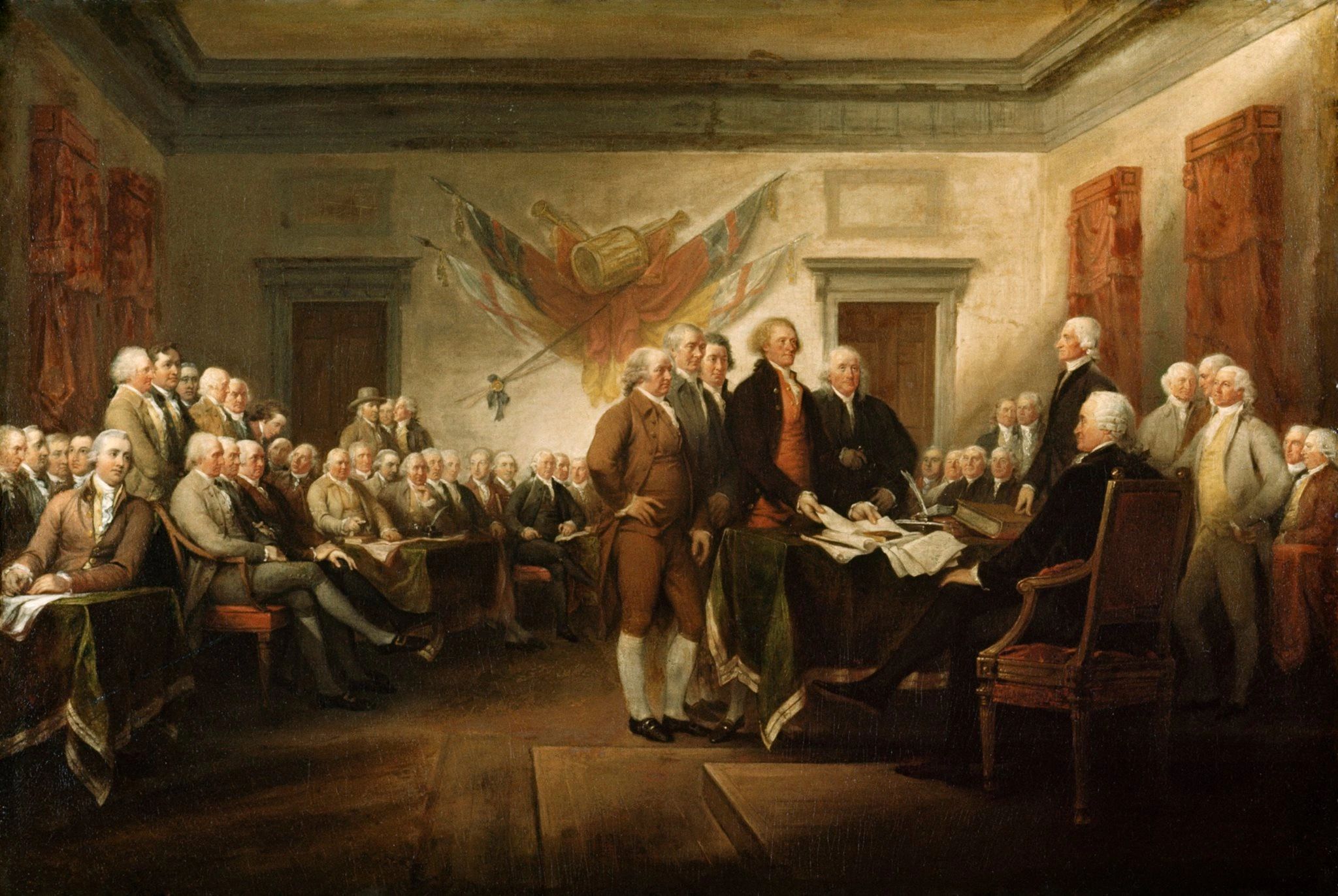
It seems that, somewhere along the line, we lost our values as a nation. Either that, or we never had them in the first place. It is very clearly stated that America was founded on the singular belief that all men are created equal, and endowed with certain inalienable rights. I know that we have all heard this a million times, but it may be worth the time to consider each of these as Thomas Jefferson himself may have imagined them.