It is no secret that the Trump administration has made clear its intentions to run the economy ‘hot.’ Essentially, this amounts to slashing regulations, dramatically cutting interest rates, weakening the dollar, and flooding the market with ‘cheap money.’ However, a never-ending series of missteps has transformed the American economy into the greatest Ponzi scheme perpetrated by a government in human history. The cracks are beginning to show, and it is only a matter of time before the day of reckoning for America’s financial system arrives.
The question becomes - has the United States economy become too hot to handle?
The Debt Dilemma
Unfortunately, the United States is not the only country dealing with significant cracks in its financial system. Stagnant growth in Europe, over-leveraging in China, and a collapsing Japanese bond market have led to monumental shifts in the global economy, and it appears that the players have all come to the same consensus when it comes to the solution - print more money.
Truthfully, this is nothing new to the financial world. For decades, countries, led by the United States, have sacrificed future stability to patch holes in their economies in the short term. This is done predominantly by debt issuance, in which the United States is a clear outlier. With a national debt totaling over $38 trillion, the idea that America will be able to meet its future obligations is little more than a fantasy. After all, the US national debt has jumped by more than $1 trillion in just the past few months, and the exponential rise in the cost of borrowing (namely interest payments) has plunged the Federal Reserve into an unsavory dilemma. For more on the debt crisis, read my article here.
On the other side of the debt issue is the consumer. Nearly every metric points to the fact that Americans are drowning in debt. Delinquencies in car notes, credit cards, mortgages, and student loans are surpassing record levels, and many of these metrics are reminiscent of the early signs of a crumbling economy, as demonstrated by the Great Recession of 2008. What’s more, the labor market has shown significant cracks, with unemployment steadily rising, and corporate layoffs ramping up significantly. Just this week, Verizon announced it would be cutting 15,000 jobs, accounting for a staggering 15% of its workforce. The telecommunications company doesn’t stand alone, either - Amazon moved to cut 30,000 employees, and UPS has fired an eye-popping 48,000 employees thus far in 2025.
Economists have also cautioned that the longest government shutdown in American history has dealt significant damage to the labor market, with October being the worst year for employees since the peak of the Financial Crisis in 2009, eliminating upwards of 150,000 American jobs in a single month. The data becomes bleaker, still, for young Americans, demonstrating that obtaining a college degree no longer guarantees strong prospects of finding a job. This comes at a time when the cost of education has soared beyond affordability for average citizens, and student debt is becoming an insurmountable barrier to even a modest standard of living. Experts warn that this reality threatens ‘financial ruin’ for young Americans struggling to pay off exorbitant loans for degrees that no longer hold weight in an evolving job market.
With the White House warning that economic data provided by the federal government may ‘never be released,’ Fed Chairman Jerome Powell is now staring down the barrel of a loaded gun when it comes to interest rates. With inflation concerns as the primary reasoning behind holding interest rates steady, many others, including Powell’s peers on the Federal Reserve Board, warn of a cratering economy should the Fed refuse to bail out the American consumer. Without key economic data from the Bureau of Labor Statistics, the Fed is ‘flying blind,’ and even a month’s hesitation could send the markets spiraling. In fact, as of the time of this writing, nearly 50% of companies comprising the S&P 500 are trading below the 50-day moving average (50MA), which is traditionally a metric that indicates weakening momentum.
The pressure has seemingly gotten to Trump, who has begun unwinding tariffs in an effort to bail out the American consumer. In the end, the economically-challenged President may not have a choice, as the Supreme Court is set to rule on whether the power to levy tariffs rests with the Executive Branch. Even judges directly appointed to the Supreme Court by Trump have rebuked the President - Justices Roberts and Barrett both challenged the notion that the President has the ability to levy tariffs without Congressional approval, with the latter even going so far as to question what might happen if the US is faced to refund the money collected in 2025. Trump quickly took to TruthSocial to stoke the fire, warning that ‘unwinding’ tariffs could cost $3 trillion. Of course, these numbers are fictitious, and Trump has no bearing whatsoever on markets, the economy, or generally any other topic, so these claims should not be taken seriously.
Still, there is reason to believe that the fallout from tariffs, whether they stay in place or are removed, will be detrimental to the American economy in both the short and long term. Ineptitude in the White House and among Trump loyalists stewarding the economy may have cost the United States its advantage on the world stage, and could lead to catastrophe for everyday Americans simply looking to survive.
Hate to Burst Your Bubble
AI seems to dominate nearly every headline in 2025. From billions pouring into data centers and top talent by Big Tech to comical videos of AI-powered robots wreaking havoc, there is no escape from the reality that this revolutionary technology has already transformed our lives, and doesn’t appear to be slowing down. This progress is not without criticism, however. Michael Burry, who rose to prominence in the investing world after successfully predicting the Housing Bubble of 2008, recently opened massive short positions in AI leaders Nvidia (NVDA) and Palantir (PLTR) before announcing that he would be closing his fund entirely by year-end.
Even the Oracle of Omaha, Warren Buffett, who is widely recognized as history’s greatest value investor, has made his stance clear on the dangers of the AI Bubble - his company, Berkshire Hathaway, is now sitting on record amounts of cash and holds an unbelievable 5% of all outstanding US Treasury bills. This position underpins Buffett’s belief that current valuations of Tech Giants, especially the Magnificent 7, are irrational, and well overdue for a correction. It should be noted that Buffett stepped back from the markets in 1969 due to a lack of opportunities for his value-based investing style.
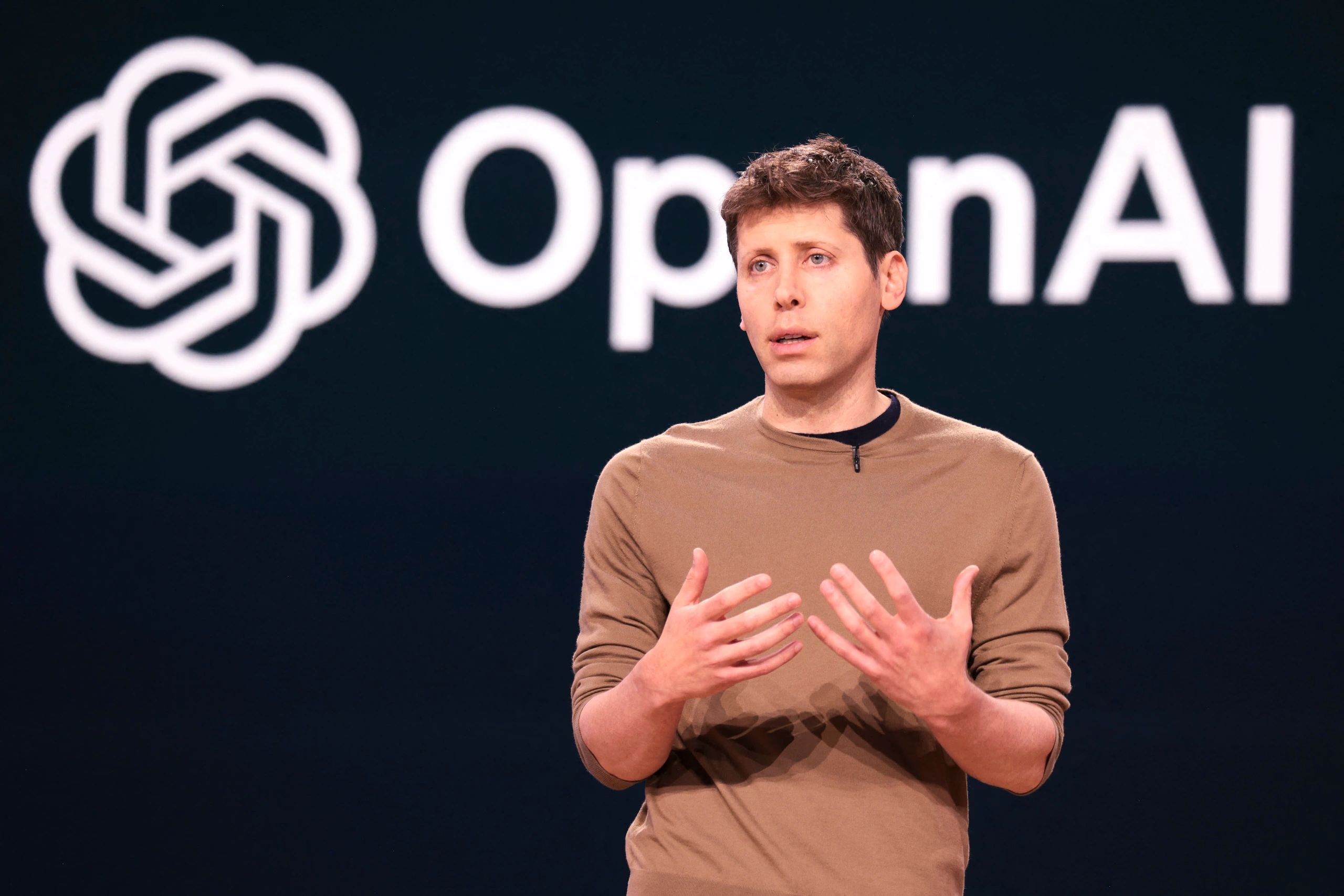
Yet, the AI train is charging forward at a frightening pace, even as concerns of a Dot-com era bubble grow. If Buffett and Burry failed to instill caution in the market, then perhaps OpenAI’s recent announcement to go public at a $1 trillion valuation might. CEO Sam Altman, who once pleaded with the Senate to impose regulations to curb the dangers of Artificial Intelligence, has made some startling claims in recent months. Despite losing $12 billion last quarter, Altman insists that OpenAI needs more funding, even suggesting that the AI giant will require close to a trillion dollars of investment by 2028. Many see this as a ‘Hail Mary’ attempt to achieve the impossible, whereas others say that the AI Race is one that the United States cannot afford to lose.
Still, the question of where the funding for AI’s insatiable appetite will come from lingers in the distance. Even AI darling Nvidia has seen a sharp rise in the number of its detractors, who point to the fact that the company’s chips are being stockpiled due to a lack of data-center infrastructure required to put them to use. This point underscores a key concern for economists - the sheer amount of energy needed to support the vision for AI dominance in the United States is extraordinary, and, perhaps, even unattainable. Even the CEO of Microsoft, which holds a 27% stake in OpenAI, stated that the issue is not a lack of supply of chips, but rather the lack of power needed to deploy them on their servers. This problem is not isolated to Microsoft and OpenAI, however; Elon Musk’s company, xAI, is currently under fire for causing mass pollution in Memphis, Tennessee, where the massive data centers that power the chatbot ‘Grok’ are located. Beyond the cataclysmic effects on the environment, additional strain on electrical grids due to massive increases in power usage by data centers has raised concerns among utility companies, and has even led to increased prices for American consumers.
None of these concerns appear to give Tech juggernauts pause, and leaders in the space have doubled-down on their AI ambitions. Unfortunately for the rest of us, if their big bet on AI doesn’t pan out, it won’t be Tech CEO’s paying the price, just as it wasn’t Wall Street that paid the price following the 2008 crash. In my mind, the question is not whether the bubble will burst, but how much irreparable damage will be left in its wake.
A Bitcoin and a Dream

Bitcoin Bros celebrated Trump’s election just one year ago, with the price of the apex digital currency rallying past $100,000 in the months following on speculation that the President’s promise to make the United States the ‘Bitcoin capital of the world’ would set them on the path to untold riches. Yet, a year later, Bitcoin’s price has retraced all of its progress, despite record amounts of institutional investment and new regulatory frameworks. Don’t worry, Trump still got the last laugh - he and his family have raked in billions and piled onto their collective net worth through innumerable financial schemes and pump-and-dump scandals, and have built key alliances with prolific crypto criminals and market manipulators. It appears that quid pro quo works in the world of crypto, too - just ask CZ.
Market makers, manipulators, and predatory exchanges have had a field day extracting wealth from retail investors in 2025, with October 10th setting the record for the biggest liquidation event in crypto history, wiping out an estimated $16 billion in leveraged positions in minutes. In the Age of Trump, this sort of criminality is not only overlooked, it is encouraged, and defenseless investors have lost time and again to big players like Binance, which has been an object of ire of the SEC for years for its manipulation tactics. Many advocates of crypto’s revolutionary role in reshaping the existing financial infrastructure argued that stronger guidance on regulation would significantly reduce volatility and dangers for ordinary investors, but this has yet to materialize. In the last few days, Bitcoin’s price dropped precipitously, landing below its 200-day moving average (200MA), a level that many believe to be indicative of a crypto bear market.
There is still hope for downtrodden Bitcoin Bros, but it is vanishing quickly. As doubts surrounding the Fed’s intention to cut interest rates and signs of weakening demand coalesce, it appears more and more likely that this could be the cycle that marks the transition into a crypto market dominated by Wall Street, a reality that almost never bodes well for retail investors.
Once again, the system has preyed on the hopes of financial freedom for the little guy, and swallowed them whole on the way down. For more on the burgeoning crypto markets, read my article here.
Asleep at the Wheel
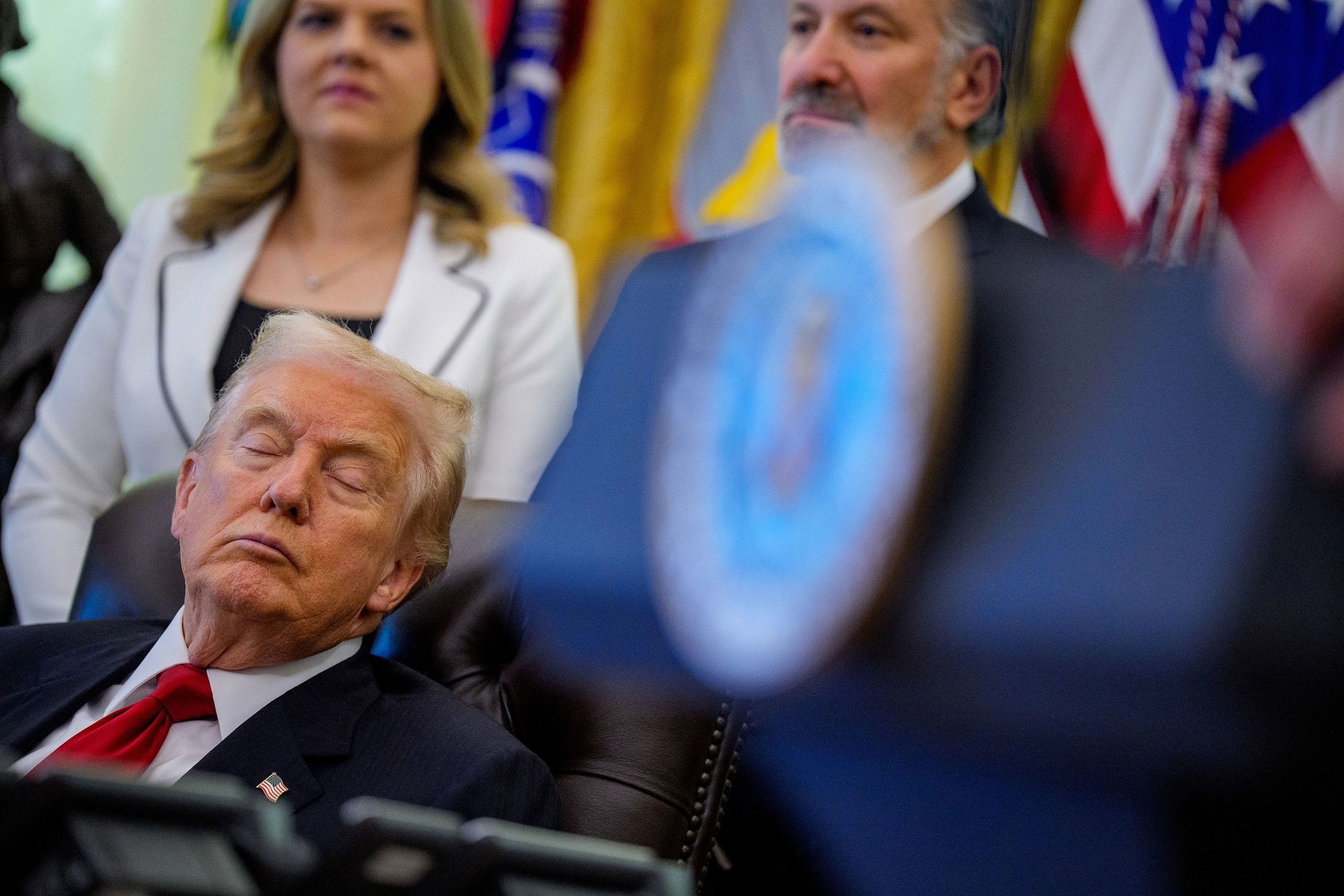
It appears that economic woes aren’t keeping Trump awake at night; in fact, they can’t even seem to keep him awake during the day.
The danger of a faltering economy is not only detrimental to ordinary Americans, it could be permanent. All signs point to a government that has abandoned its constituents in favor of enriching the elites and siphoning away as much wealth as possible. The Trump administration has moved to benefit the richest to the detriment of the poorest, and not only fails to offer solutions, but continues to peddle falsehoods that the economy is the ‘strongest it has ever been.’
Recent elections point to the fact that many Americans are no longer buying into the lies so shamelessly propagated by the most-corrupt administration in history. It’s a shame that the rape, fraud, constitutional crises, misogyny, racism, ignorance, and general lack of morals of the President weren’t enough to sway voters, but perhaps the inability to afford food, healthcare, or housing will be. After all, Trump and his cronies are actively working to starve families and children reliant on SNAP benefits at this very moment, just days after the longest government shutdown prevented tens of millions of Americans from receiving paychecks.
As the saying goes, ‘Elect a clown, expect a circus.’ Trump has faced bankruptcy 6 times in his life, and it appears that the United States is slated to become his 7th.