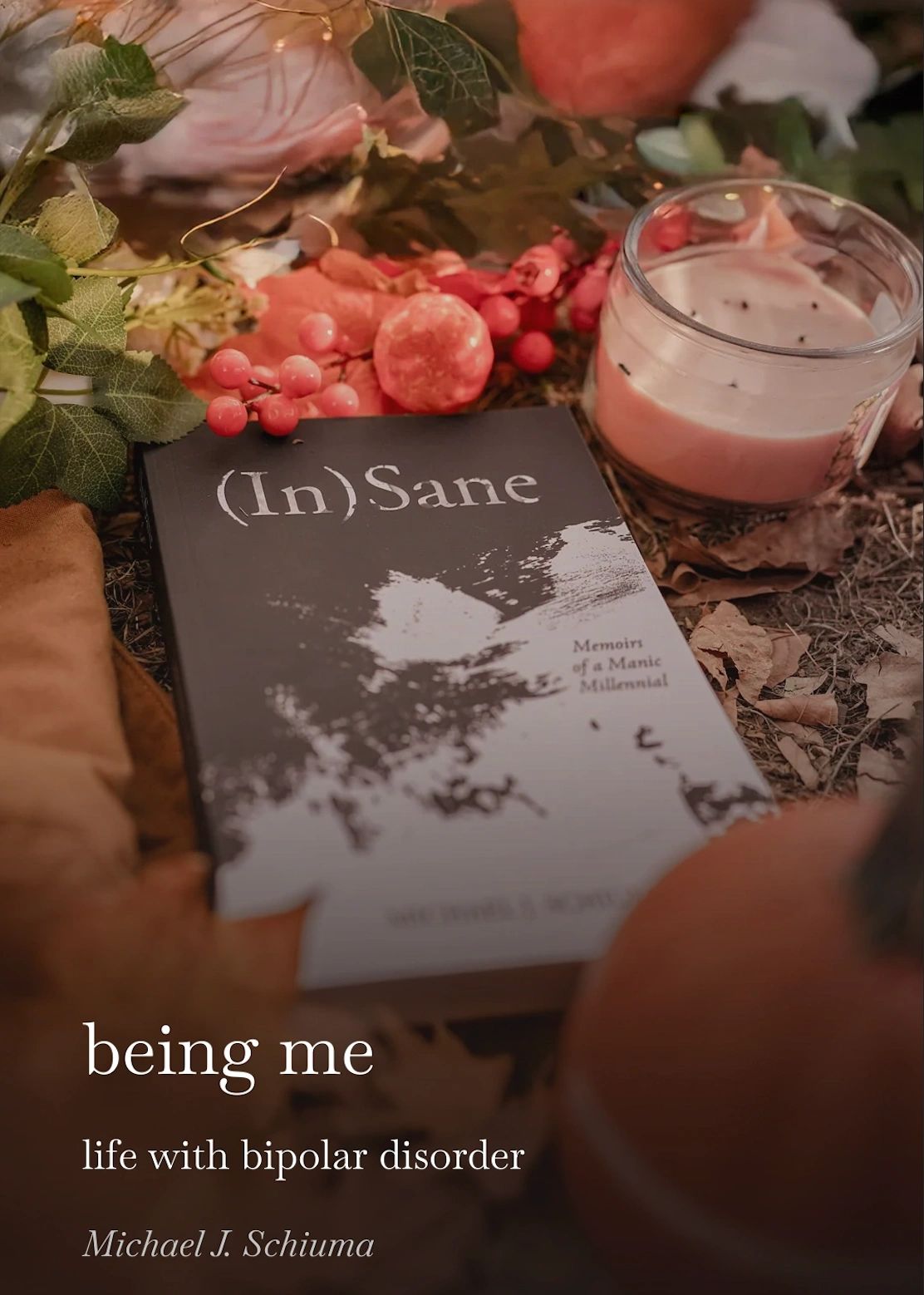
When I first sat down to write my memoir (In)Sane, my entire life was crumbling (or, rather, had already crumbled) around me. 6 years later, I’m helping others to navigate the hardships that inevitably accompany mental illness.
In a recent conversation, I lamented about always being concerned about achieving certain goals, or finding myself in a constant state of anxiety over seemingly trivial things. The next thought was a revelation — even through all of that worry, things worked out. Every. Single. Time.
This is the importance of positivity in our lives, especially for those struggling with depression, anxiety, and other psychological issues. When I was suddenly bankrupt, jobless, and broken in the psych ward, it felt as though I would never have my life back, or ever feel normal again. Yet, through it all, my life has only improved, and improved dramatically.
It is easy to lose sight of the positives in life, especially when depression is on the menu. Believe me, I spent plenty of days wallowing in sorrow, and wading through the depths of mourning. To some degree, this builds character — everyone, regardless of their mental health, must learn at some point to grapple with these intense emotions, and, ultimately, overcome them. However, if you allow these feelings to consume you, as I often did, there is nary a positive outcome.
In a recent talk I gave to families with loved ones refusing medication and treatment, I was asked how it was that I came to accept these things in my own life, especially my diagnosis as Bipolar I. I began my answer truthfully — at first, I hadn’t. It took many long months of hospitalizations, doctors, and some of my more-persistent family members to convince me that taking these medications, and attending these therapy sessions, were truly a positive aspect in my life. Although it is nearly impossible to convince someone in a state of mental dysphoria (in my case, mania) to accept treatment at times, ultimately, it is the only way.
I paused before continuing on. “The best way to approach medication,” I remarked, “is to think of it as a bridge to a better place.” So, although in this case I was addressing a question about medication, the answer goes much deeper. In the face of unrelenting mental illness, or human suffering of any kind, it is important to see the recovery as a process, as something that builds over time.
Again, I know that this sounds like an empty platitude. I often found myself rolling my eyes at my various care providers when they said this to me on a daily basis. Yet, their words went on to ring true, and I’m grateful that, even though I had given up on myself and the hope of getting better, they never did.
So, as human beings, we always have the choice. We can see the rough waters ahead, and remain in place, or we can choose to take them on, and build a bridge to the better place that waits on the other side. On some days, you may lay the foundation to take many steps across it; on others, you may even have to take steps back. The important thing is to keep going, no matter what the day holds in store for you.
One day, when you’re standing on the opposite bank of the river of sorrow that you once found impassable, your present self will be thankful that you chose to overcome. I’ve been on both sides of the river, and it cost me everything to start the journey to this better place. Now that I’m here, there’s no place I’d rather be.
Check out my poem, a better place, here.