When I was first considering publishing my memoir, (In)Sane, one of the biggest questions was - how will this decision affect my life, personally and professionally? Well, it turns out, it has created more opportunity than I could have imagined.
The Reality of Mental Illness

In my memoir, I describe waking up in the psychiatric hospital after an unfortunate dalliance in a casino had led to police involvement, and, ultimately, being forcefully committed to the ward. I recall finding myself in familiar company:
One of the most-frightening discoveries that I made in my new residence was that, after all was said and done, the patients that inhabited the space with me were some of the most-intelligent and most-accomplished that I had known. Police officers, lawyers, small-business owners. Their stories all seemed so similar to mine: they had been looking to manifest a dream, do something to help others, or simply get ahead, and had lost in that terrible race against time. A loss resulted in hospitalization, and many were veterans in that respect.
Yet, there we were, prisoners on the (in)side of (in)sane. Bipolar, depressed, schizophrenic, rebellious, paranoid, ill-adjusted, sociopathic, damaged. I fit right in.
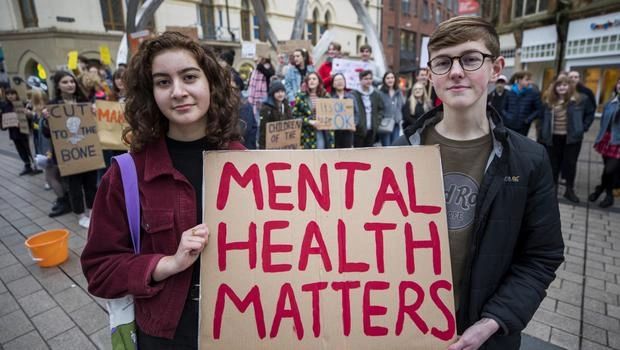
This excerpt captures the reason that Mental Illness is such a difficult problem to address - it is not obvious to the outside world that someone is suffering. Until we are able to open an honest dialogue on how this crisis affects all of us, we allow the stigma behind it to prevent people from seeking treatment, and regaining control of their lives.
The Invisible Epidemic

Although it is often swept under the rug, Mental Illness is something that affects everyone. Statistics show that nearly 25% of people in the US suffer from a diagnosable mental illness. Additionally, the mental health of people who don’t suffer from a diagnosable mental illness must be considered, because mental health does not stop at a diagnosis.
In a world experiencing so many existential crises, it is more important than ever to take care of our minds, something that is often forgotten. I can personally attest to the fact that my anxiety, depression, and the other symptoms of Bipolar have had a severe impact on my physical health, and these things cannot be cured through prescription medication.
Many people suffering from mental illness feel invisible, because they don’t know how to seek help. That is precisely why I decided to embark on the journey of advocating for Mental Health Awareness - one conversation, one realization, one shared story could be the difference between someone seeking help, or continuing to suffer in silence.
Facing Fears

Before publishing my memoir, one of my greatest fears was that sharing some of the most-dire trials and tribulations in my life, and the behaviors that surrounded them, would cause people to ostracize me, if only subconsciously. When you hear about the more desperate moments in someone’s journey, which often include irrational behavior and other uncharacteristic personality traits that manifested in a time of crisis, it undoubtedly changes the way that you view that person.
Fortunately for me, my friends, family, coworkers, and others with whom I have connected in the past 6 months have had nothing but encouraging words and support for me. This truly confirmed that my choice to share my story was the right one.
This is, of course, one of the primary issues in stopping the stigma surrounding Mental Illness, and the conversation surrounding the competence of people suffering from it. Despite suffering through Bipolar, I was able to graduate college, pursue further education, progress in my career as a Software Engineer, and self-publish 3 books. Although it has certainly made my journey more difficult, Bipolar is not a barrier to my success.
If I can do it, so can you.
Follow me on Instagram @poetrybymjs or on TikTok @mjswrites for more Mental Health content.