Whenever I receive compliments on my Russian, I think of one thing - tea with milk. It was in Almaty, Kazakhstan that this all transpired. I was a naive, young, inexperienced American, attempting to integrate into a culture entirely foreign to my own. When I received the email that confirmed I would be spending my Junior year in a place that I knew only by the educational pamphlets that the program provided us, briefly explaining the storied history of the Kazakh people, I wasn’t sure what to expect. Then came along Larisa.
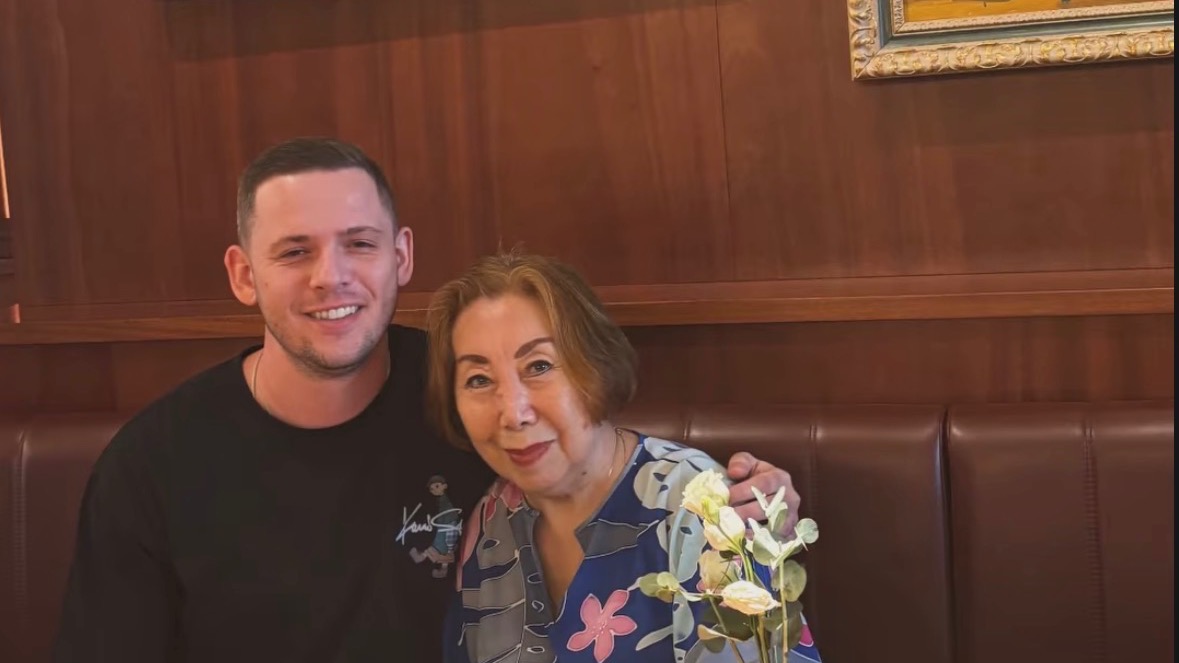
I affectionately call her my ‘host mom’ in English, and анам, the word for ‘my mother’ in Kazakh. She cannot be more than 5 feet tall, but you’d be a fool to cross her. Decades spent navigating the curious and often-bleak reality of Soviet life had left her tempered, accustomed to hardship in a time when the world was moving in opposite directions. As a Metallurgical Engineer in charge of reporting to Moscow on mineral and precious metal deposits in the mines across the Soviet Union, she was one of few women (especially Kazakh women) in an authoritative position, and her expertise and scientific abilities were paramount to an enormous empire struggling desperately to achieve cohesiveness between the hundreds of millions of ‘comrades’ of the Communist Party. She recalls the mystique of ‘Western’ culture, and the sort of suspicion and wariness that people of her generation applied to it. When she came to visit my family in New York, we were very surprised to find out that she not only knew about Tiffany’s jewelry, but it was at the top of her list of things to do - she had seen the magazines and movies glamorizing it as a young woman, and wanted to experience it for herself.
Our relationship was most certainly unexpected, but all the better because of the way that the fates seemed to have aligned. When I first moved into her one-bedroom, Soviet-style apartment, my Russian was not developed to the point that I had the ability to carry on in full conversations. I knew the foundation, and was quite capable in many capacities, but I had never lived in a truly russophonic world. Anyone who has tried DuoLingo, and then visited a country speaking that language will tell you that rote memorization and pronunciation practice are far from all that is required to truly engage in a foreign language. So, I did what seemed the most logical - I became a prodigious listener.
Each day, after returning home in the evening from university, we would sit at the tiny table wedged into the corner of her kitchen, sipping on handleless mugs of tea - always ‘Kazakh style,’ with milk. Then, she would dive into deep recollections of all sorts, and, many times, I felt myself scrambling to catch just a word or two of what she was saying in order to capture the context. For several months, I did not possess a full understanding of all that was being said, but we quickly grew fond of each other, and our relationship evolved, out of necessity as well as mutual respect.
I became more comfortable in everyday speech, and her commands to ‘wash my hands’ or ‘take the #119 bus’ became second-nature. Ever a proponent of education, she would sit quietly with me in the living room, television glowing softly in the corner, and watch as I completed the exercises given by my professors. She read my contrived essays as I wrestled with the complexities of Russian grammar and vocabulary, and attempted to find my own means of expression in a language and culture that still felt unfamiliar. As time went on, we grew closer, and slowly began to share parts of our respective lives with each other.
One night, on my first video call back to my parents since leaving New Jersey, Larisa introduced herself, walking into the room before placing her hands on my shoulders in an endearing gesture. Also a linguist by nature (she had been top of her class in Russian language, and taught herself Kazakh by ear), Larisa greeted my parents, and, gesturing towards me, said confidently in English ‘my son.’ Immediately after hanging up, my mother burst into tears, whether from longing or just a profound disbelief at the situation, it wasn’t clear. My dad attempted to diffuse the tension with a bit of humor, remarking, ‘Great, now we have to go kidnap him back from Kazakhstan.’ Seeing the reaction, Larisa felt a deep sense of trouble, not intending in the least to cause any distress. She had simply tried to communicate in the best way she knew how that I was now as good as family, and she would care for me just as a mother would, no matter what.
Now, Larisa and I have known each other for more than 12 years, and our bond has only grown stronger with time. She knows everything about my life and my family, and is known to send some of the most-thoughtful birthday cards to my relatives, a testament to her memory of each of the dates. She loves to invoke reactions among people when I visit, remarking that I’m her American son whom she ‘abandoned in the United States.’ It was always a good laugh to see how they might respond, and remains among our favorite ruses.
As my fascination with Kazakh culture grew, I was encouraged by her to delve into new areas of interest, especially of art and music. Larisa could recount the stories behind her favorite impressionist paintings and artists (although her favorite, Van Gogh, was a post-Impressionist), and we spent many hours, and many cups of tea, discussing their histories and looking at photographs of her travels to museums and churches all over the world. She shared with me her great admiration for figures, both of the past and present, and seemed to always possess exhaustive knowledge of their life stories, and how they had become so achieved. When I speak to people in Russian, they often remark that my language is very ‘literary,’ that I use words that are uncommon in daily speech. That’s thanks to Larisa, whose command of the Russian language is second-to-none.
It is simply beyond words how my life has been transformed by my time in Kazakhstan. Each time I visit, I find it more difficult to leave. It is a place that I happily call a ‘second home,’ a place replete with fond memories of romance, friendship, self-discovery, intrigue, and reminders of my formative years. I often joke that I am American by nationality, but Kazakh by soul, and I say this without irony. I have fallen in love with the culture, the way of life, the person that I became in my time there.
After seemingly endless hours of flying to arrive in Almaty (I average about 30 hours, door-to-door), there is only one certainty - my анам standing at the very front of the eager cohort awaiting arrivals, smiling serenely at the thought that her American son, whom she abandoned all those years ago, has finally returned home. There will be supper on the stove upon returning from the airport, too; a rustic bowl of chicken soup, or the Kazakh dish beshbarmak, with the horse meat substituted for beef, just for me. Next, we’ll retire to the living room table laden with sweets and treats of all varieties - candies from the local factory, bowls brimming with nectarines and peaches from Uzbekistan, and dried apricots exploding from a glass dish, coalescing to form a tradition of which I never tire.
To this day, when I speak Russian, I hear Larisa in my speech. It is her inflection, her sense of humor, her wit, her enthusiasm, her expansive vocabulary that have trickled into my own over all of these years. How is it that two people of utterly opposite upbringings, generations, races, and religions can become dearest? I’m still not sure, but if you were to witness how her and I argue and quibble with each other across the table, you’d feel pretty sure that, somehow, we must be related.
So, here’s to many more cups of tea with milk. To many more nights spent among our dearest, wherever, and whoever, they might be.